
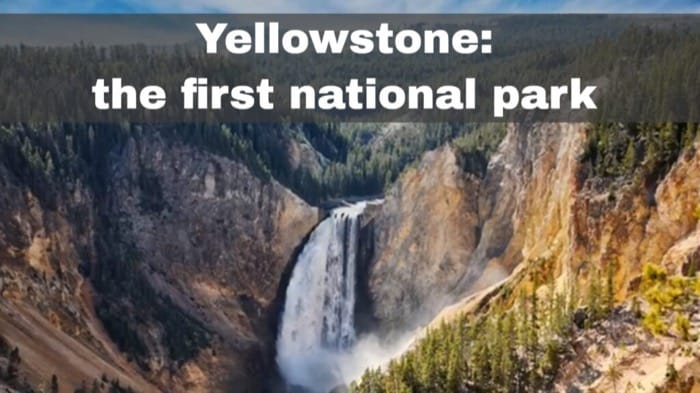
On March 1, 1872, something unprecedented happened: Yellowstone was designated as the first National Park, and in doing so, the very idea of national parks was born. Up until that point, undeveloped land was regarded as little more than a commodity waiting to be harvested. It took the breathtaking natural beauty of the Yellowstone region to fundamentally shift how many people thought about wild places.
During the early 19th century, members of the Lewis and Clark expedition learned about the Yellowstone region from the area's native inhabitants but never ventured there to see it for themselves. One expedition member, John Colter, broke away from the group and explored the region on his own. What he encountered were remarkable geothermal features, which he would later characterize as a land of "fire and brimstone." Other visitors to the area spoke of hot rivers, boiling mud, a mountain of yellow rock and glass, and petrified wood. Their accounts were met with widespread disbelief, and before long, Yellowstone gained a reputation as a place of myth and folktales.
Yet later explorers would confirm that Yellowstone's bizarre natural wonders were anything but fictional. The sights left a profound impression on those who witnessed them, and Cornelius Hedges, a lawyer and writer, put forward a bold idea: rather than allowing the Yellowstone region to be stripped for its resources, it should be protected and preserved as a kind of national park.
Nothing like a national park had ever existed before, and plenty of people living in the Yellowstone region pushed back hard against the proposal. They worried that restricting land development would devastate the economic futures of their towns. Despite this opposition, the Yellowstone National Park Protection Act was signed into law in early 1872, giving birth to America's national park system.