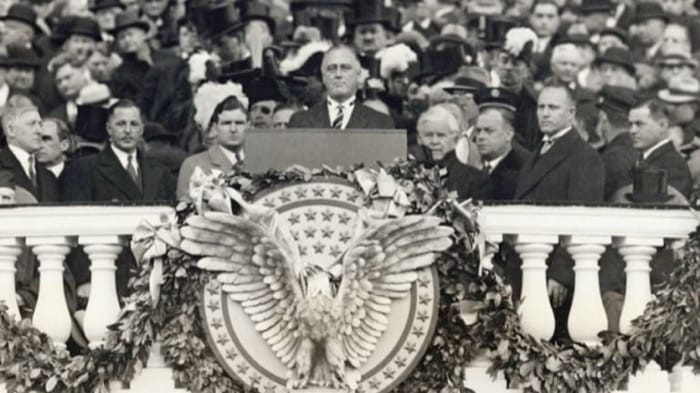
By early 1933, the United States found itself in a deeply desperate place. Years of the Great Depression had taken a devastating toll. Runaway inflation, skyrocketing unemployment, and a government that appeared completely lost in the face of crisis left Americans feeling trapped with nowhere to turn. Hope seemed like a distant memory. But then came the election of Franklin Delano Roosevelt, whose inaugural address on March 4, 1933, would mark a dramatic turning point.
Standing before the nation, FDR flatly rejected the notion that the situation was beyond repair. He pointed the finger squarely at the outgoing administration, accusing it of catastrophically mishandling the crisis while refusing to acknowledge just how deep the country's troubles truly ran. His message was one of resilience and conviction — he expressed his firm belief that prosperity could be restored if the American people embraced the possibility of success and committed themselves to the hard work required. And then he delivered what may well be the most iconic sentence any political leader has ever spoken, distilling both the root of the nation's struggles and the key to overcoming them into a single, unforgettable declaration: "The only thing we have to fear is fear itself."
Those words resonated powerfully across the country. Americans rallied behind FDR in enormous numbers, throwing their support into his ambitious agenda. He launched an expansive new jobs program that put people back to work, driving unemployment down and breathing new life into the battered economy. In the end, Roosevelt's message proved prophetic. What had truly held the nation back was fear itself — the paralyzing belief that nothing could be done to change their circumstances.