
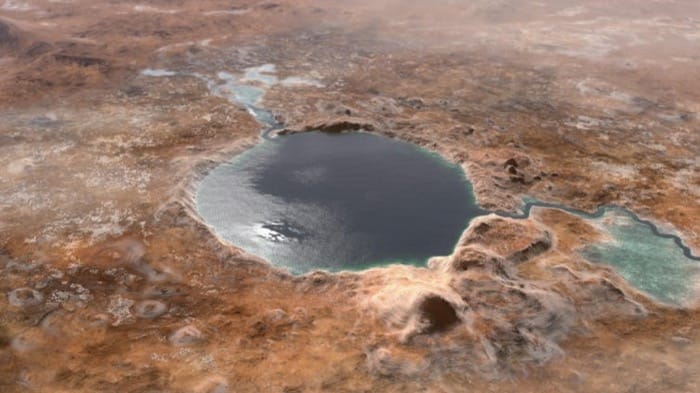
Mars had long been known to harbor water in its frozen and vaporous forms, but the notion of liquid water flowing across its surface? That seemed like a stretch — until NASA's Mars global surveyor changed the conversation. Drawing from images captured of the planet since 1999, the surveyor delivered what would become the most substantial scientific evidence of water flowing on the surface of Mars: photographs of Martian gullies that told a compelling story.
Here's what caught researchers' attention. When comparing photographs taken in 1999 with those from 2004 and 2005, light-colored deposits became visible on two crater walls — deposits that hadn't been there before. Nearly a decade of orbital observation culminated on Dec 6, 2006, when NASA publicly released images of two specific craters — Terra Sirenum and Centauri Montes — that pointed to the presence of liquid water on Mars. A scientist explained that the deposits bore a striking resemblance to residue left behind when water seeps through gullies. Because the material had taken on the characteristic shape of filtered residue, it is believed that water served as the fluidizing agent. The rapid evaporation of this water could be explained by the planet's low temperature and pressure at the surface.
What makes this discovery so tantalizing? Some scientists maintain that if liquid water truly exists on the planet, it opens the door to the possible existence of microbes on Mars. Skeptics have offered alternative explanations, pointing to rock falls or landslides as potential causes of the observed flow patterns. However, the specific nature of these craters works against that argument. The visible changes are more likely to have originated from a fluid substance, and in this case, that substance is thought to be water.