
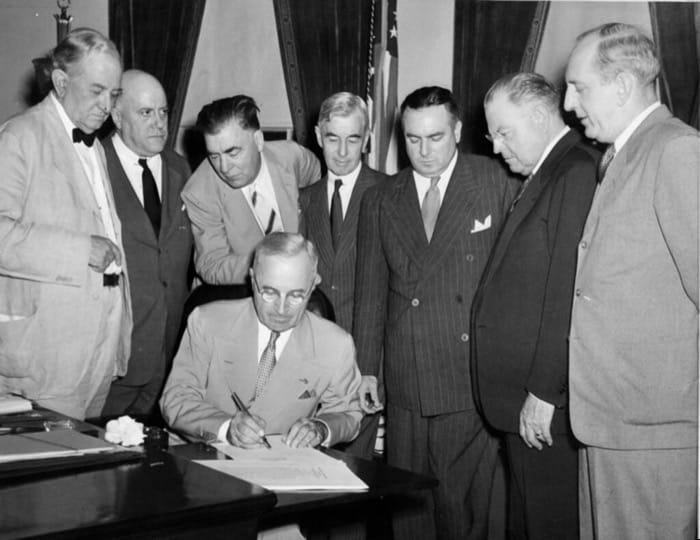
On March 28, 1946, the world found itself at a pivotal crossroads. The atomic bomb had been unleashed for the first time not long before, and the Cold War was in its earliest stages. Against this backdrop of newfound nuclear peril, a report emerged that laid out a framework for addressing the growing threat of nuclear proliferation. Its core message was straightforward: place nuclear weapons under international oversight and take every conceivable step to prevent nuclear war. The world, however, paid it little attention.
President Harry Truman was grappling with a nuclear crisis that had no precedent. Within his circle of advisors, opinions were sharply divided. One camp argued that the United States should capitalize on its unique position as the sole possessor of nuclear weapons, pressing forward with arms development and leveraging fear and intimidation to keep Stalin's Soviet Union in check. The opposing camp took a different view — they believed that the very nature of scientific progress meant the Soviets would inevitably build their own nuclear arsenal. Given that reality, it made more sense to extend an olive branch, offering to halt weapons development as a bargaining chip to negotiate a mutual agreement with the Soviet Union in which both nations would abandon nuclear research and development altogether.
Truman ultimately tapped Secretary of State Dean Acheson, who favored the disarmament path, to craft a comprehensive nuclear weapons policy for the country. What emerged from this effort became known as the Acheson-Lilienthal Report.
Early on, there were genuine efforts to act on the report's recommendations. But the chasm of distrust between the two superpowers proved too wide to bridge. Truman was reluctant to make significant concessions to the Soviets, while the Soviet side viewed Truman's plan with deep suspicion. In the end, the Acheson-Lilienthal Report faded into obscurity. Both nations threw themselves into building and stockpiling nuclear weapons at breakneck speed. The Soviets succeeded in developing their own atomic bombs, and with that, the arms race was underway.