
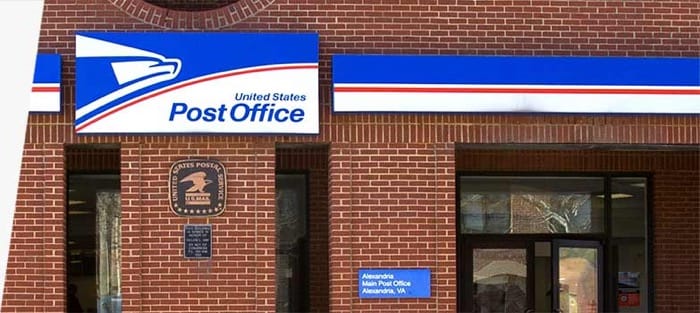
When George Washington put his signature on the Postal Service Act on February 20, 1792, he brought into existence the Post Office — an institution that, remarkably, continues delivering mail to this day. Before this landmark legislation, what passed for a postal system in the colonies was a loosely organized, makeshift affair. Its performance ranged from unreliable to completely nonfunctional.
In fairness, though, the system's shortcomings were understandable. The Continental Congress had been forced to cobble together a postal service on short notice once the Revolutionary War erupted and access to the British mail system was cut off. While this improvised arrangement managed to hold together adequately through the war years, it simply wasn't built to serve as a permanent solution.
Under the new legislation, 75 post offices were established along with roughly 2,400 miles of dedicated mail roads — a network designed to serve a population of around 4 million people. Sending a letter within a 30-mile radius would set you back 6 cents, the equivalent of roughly $1.50 in today's money. For distances between 30 and 150 miles, the cost jumped to 12.5 cents — about $3 by modern standards. Anything beyond 150 miles? That mail simply wasn't delivered.
Fun Historical Fact: Among its various provisions, the Postal Service Act included a rule that might seem obvious today: mail carriers were explicitly prohibited from opening the letters they transported. The reason behind this clause was almost certainly rooted in a scandal involving Benjamin Franklin, who had been forced to step down in disgrace from his role leading the colonial postal service. His offense? He had been intercepting and publicly releasing the private correspondence of the governor of Massachusetts as a strategy to humiliate him.