
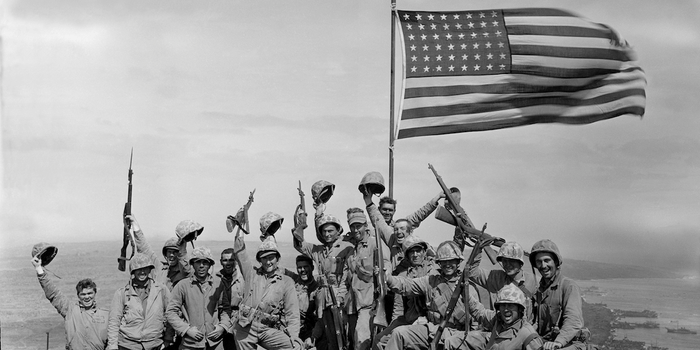
On February 23, 1945, a pivotal moment unfolded during one of the most legendary engagements in U.S. Marine Corps history — a moment that would go on to become among the most universally recognized images of World War II. Just four days before, when Marines first hit the beaches, the operation had looked like it might proceed without major complications. Three Marine divisions came ashore on the tiny island of Iwo Jima, which measured a mere 8 square miles. Initial resistance was light. That changed dramatically when Japanese defenders emerged from an elaborate network of underground tunnels, making it clear that a brutal fight lay ahead.
It didn't take long for the Marines to identify the critical objective: a dormant volcano looming over the island's southern half, nicknamed "Hotrocks" by the troops. What followed was a grueling, yard-by-yard assault against heavily entrenched defenses on the fortified mountain. For every single yard of progress, the Marines sacrificed one soldier — a cost their commander described as "a hell of a day in a hell of a place." But on February 23, they clawed their way to the summit at last. Atop the mountain, they planted the American flag as a powerful symbol of their hard-won triumph, and the photograph taken in that moment would become legendary.
Combat raged on until March 26 with considerable ferocity, but from that day forward, momentum had shifted unmistakably to the American side. The sheer scale of bravery displayed throughout the battle was staggering — an extraordinary 27 Medals of Honor were bestowed for acts of heroism, with many of those honors awarded posthumously.