
With the Civil War a few years in the rearview mirror, the process of Reconstruction was proving deeply troubled. Abraham Lincoln's assassination had elevated Andrew Johnson to the presidency — a Southern Democrat whose sympathies clearly aligned with the former Confederate rebels.
Congressional Republicans from the North, who held commanding power in the post-Civil War legislature, pushed for sweeping reforms: immediate citizenship for formerly enslaved people, voting rights, and financial support. They saw these measures as essential to putting the nation back together. Johnson, though, stood firmly in their way at every opportunity. He granted pardons to rebel soldiers, adopted a remarkably lenient approach toward the former Confederate states, and repeatedly vetoed key Reconstruction legislation. Furious members of Congress came to view him as a one-man wrecking crew bent on sabotaging Reconstruction, and they began searching for any possible means to get him out of their way.
Their opportunity came through Edwin M. Stanton, who served as Secretary of War. When Johnson made it clear he intended to dismiss Stanton, Congress acted preemptively by passing the Tenure of Office Act — a law crafted with the explicit purpose of preventing Johnson from firing him. Johnson went ahead and did it anyway. On February 24, 1868, the House struck back by voting to impeach him, marking the first time in American history that a sitting president had ever faced impeachment.
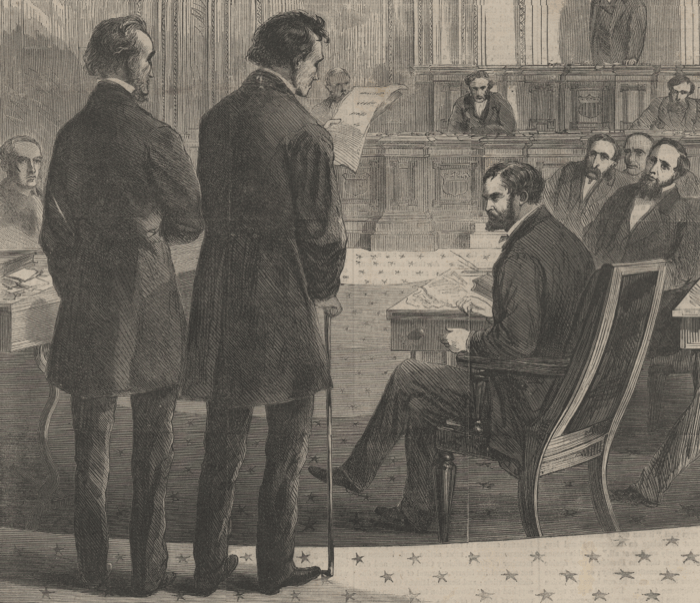
What followed was a Senate trial to determine whether Johnson should actually be removed from office. Most observers expected conviction, given how blatantly he had violated the law. Yet when the votes were tallied, the effort came up just one vote shy of the two-thirds majority required for removal. Johnson kept his position and served out the rest of his term, though he chose not to seek the presidency again once that term concluded.