
Once the President of Iraq, Saddam Hussein left a mark on the world stage through several notorious actions. Among them was his 1980 invasion of the Islamic Republic of Iran, carried out with various forms of support from the United States, the Soviet Union, and other countries. Behind this aggression lay twin ambitions: establishing himself as the dominant force in the Persian Gulf and weakening Iran to the point where it could no longer export its revolution to Sunni-ruled, Shia-majority Iraq.
Another defining chapter in Hussein's legacy was his invasion of Kuwait. Historical claims to the territory played a role, but so did a more pressing concern — the staggering debts accumulated during the ruinous Iran-Iraq War, which left Hussein in desperate need of funds. Notably, he owed something like $30 billion to Kuwait alone. Taking over the country turned out to be a catastrophic miscalculation, however, as a U.S.-led coalition swiftly moved in and smashed up his forces.
The next blow came in 2003, when US President George W. Bush ordered an invasion of Iraq aimed at toppling Hussein's government, justifying the action on the basis of less than truthful claims. A U.S.-led coalition once more smashed up Hussein's forces, and within three weeks, his government had completely collapsed. Rather than making a stand in his capital of Baghdad, Hussein chose to go into hiding.
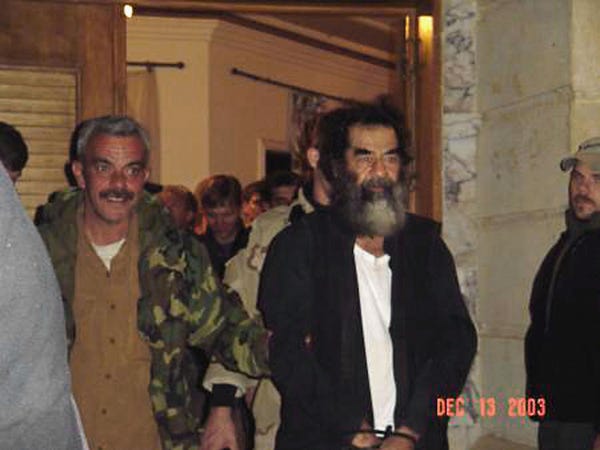
With that, Hussein rose to the top of the United States's list of the most wanted Iraqis — the number one target. It was Operation Red Dawn that finally brought his time on the run to an end, as US soldiers captured him on December 13, 2003, discovering him hiding in a hole situated close to his hometown of Tikrit. Many at the time believed that Hussein's capture, subsequent trial, and subsequent execution would dampen the enthusiasm of Iraqi insurgents. That hope, as it turned out, proved to be unfounded.