
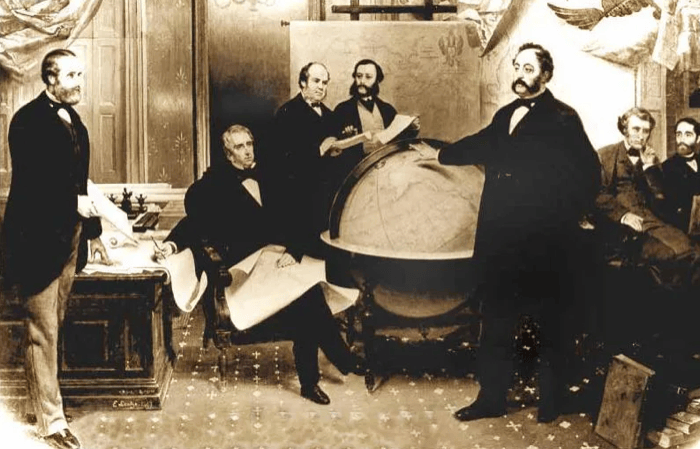
It might sound strange from a modern perspective, but Alaska was actually under Russian control for the better part of the nineteenth century. That changed on March 30, 1867, when the United States purchased the territory from Russia at a price of roughly 2 cents an acre. Even accounting for the considerably greater purchasing power of the penny in that era, the price tag was remarkably low.
Yet Russia had its eyes on something far more valuable than the sale price. The country had once envisioned building a network of profitable and robust trade settlements along the Alaskan coast, but those ambitions never materialized. Instead, Alaska had turned into a financial drain — a territory Russia could neither properly invest in nor adequately defend. Compounding the problem, Russian traders operating in Alaska found themselves in repeated clashes with American explorers in the area, creating the risk of a conflict Russia simply couldn't afford. On top of all that, Great Britain, one of Russia's primary trade competitors, was growing disturbingly powerful in the Pacific.
Offloading a territory that had become more burden than asset turned out to be a strategic masterstroke. Russia sidestepped a brewing confrontation with America, introduced a formidable new Pacific rival to distract Great Britain, saved considerable money over the long term, and even walked away with a tidy profit on top of everything else.
At the time, plenty of Americans couldn't understand the rationale behind the deal. Secretary of State William Seward had negotiated the purchase, and critics mockingly called it "Seward's Folly." But Seward would ultimately be proven right by history. Gold was found there first, and later, oil emerged as well.
Beyond its natural resources, American ownership of Alaska may well have prevented a serious crisis — or even outright catastrophe — during the Cold War. A physical Soviet Russian presence that close to American soil could have been enough to trigger a nuclear war.