
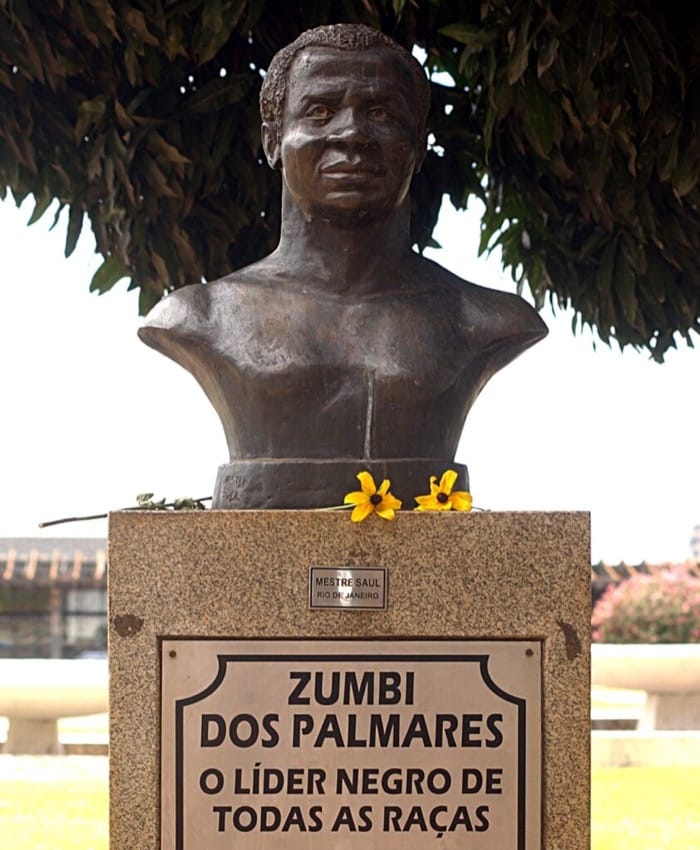
On November 20, 1695, Portuguese soldiers hoisted the severed head of Zumbi — the last Warrior king of Palmares — onto a stake planted squarely in the central plaza, as the townspeople of Quilombo dos Palmares looked on.
A city built by runaway slaves, Palmares was home to roughly twenty thousand settlers of mixed ancestry, free blacks, and Indians. For close to a century, this resilient community had beaten back relentless Portuguese assaults. With Zumbi's rising popularity, their collective resolve to stand and fight only deepened.
The Portuguese colonial authorities viewed fugitive slaves as a direct threat to their power. These escapees had built a communal way of life rooted in subsistence agriculture, shared land ownership, and trade. To supplement what they produced, they also conducted raids on the settlers' sugar mills and plantations.
What made the Palmares community especially formidable was its cultural diversity. Indigenous traditions, Bantu customs from central Africa, and Catholic practices all coexisted within it. From this rich blend, the people borrowed freely from one another's ideas and ways of life, gradually forging a single, cohesive Palmares identity.
The colonial ambitions of the Portuguese — already fragile — were shaken further as Zumbi assembled and organized his army of fugitive slaves. The ripple effects of his efforts stoked deep frustration among the colonizers and ultimately pushed them to strike back.
Despite their relative weakness, the Portuguese launched an offensive against the Quilombo. In 1693, they set out to hunt down Zumbi, equipped with a formidable arsenal of weaponry, a fresh influx of capital, and an army of mercenaries. Two years later, in 1695, they finally captured and executed him.
Even though Zumbi's guerillas were ultimately defeated by the Portuguese, the legacy of Palmares proved far more enduring. Tales of the community fanned the flames of resistance against slavery, military rule, racism, and capitalism among future generations. Its influence also left a profound mark on Brazilian culture and politics.