
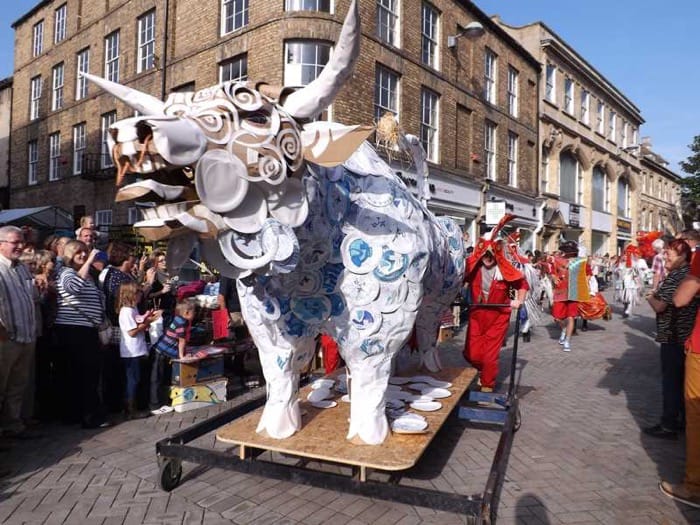
The Stamford Bull Run was an annual bull-running spectacle that took place each St. Brice's Day (November 13) in Stamford, Lincolnshire, England. Its origins stretch back to the reign of King John (1199-1216).
The festivities kicked off when the bells of St. Mary's Church rang out at 10:45 am. Shopkeepers shuttered their doors, and residents lined the streets with wagons, carts, and barricades to form a makeshift corridor. Then, at 11:00 am, a bull was turned loose to charge down the street, goaded by rowdy, intoxicated crowds and — in a particularly bizarre touch — a man who rolled toward the animal inside a barrel.
From there, the mob would chase the bull until it was driven into Bull-Meadow or the River Welland. Once cornered, the animal was caught, slaughtered, and its meat distributed to the poor.
Opposition to the Run surfaced in the late 1700s, with mounting efforts to put an end to it. The Society for the Prevention of Cruelty to Animals made a push to ban the event in 1833, only to be met with fierce resistance from locals. Tensions boiled over in 1836 when a mob attacked both a police officer and the home of a vocal Bull Run opponent. The violence led to a trial, and the Court convicted three defendants. Authorities escalated their response in 1837, deploying both police and military forces to shut the Run down — but the crowds, along with the bull itself, simply burst straight through the security line.
By 1839, the authorities were determined to bring the tradition to a definitive end. They mustered a large enough force of police and military that the Run was over almost as soon as it started. That brief final event, combined with growing frustration among Stamford residents over the mounting expenses — including the cost of the militia — ensured that November 13, 1839, marked the very last Bull Run.