
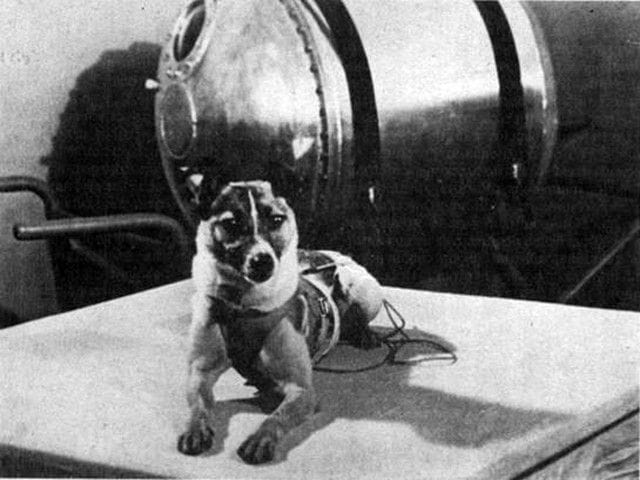
On March 9, 1961, a Soviet space dog named Chernushka launched into orbit alongside a rather unusual crew: mice, guinea pigs, and a mannequin cosmonaut going by the name Ivan Ivanovich. It might sound like the premise of an animated children's show, but this was a very real—and very important—chapter in the Soviet space program's history.
During the earliest era of space exploration, the question of whether humans could safely travel beyond Earth's atmosphere remained unanswered. To tackle this uncertainty, the Soviets opted to send dogs into space ahead of human cosmonauts. These brave four-legged pioneers became known as the Soviet Space Dogs. Chernushka's story was particularly remarkable because she was essentially a second-generation space traveler. Her mother, Pushinka, had already completed a spaceflight and was later presented as a gift to the daughter of the U.S. President. Pushinka went on to have puppies—affectionately nicknamed the "Pupniks"—and from that litter, Chernushka was selected to carry on her mother's legacy aboard the Sputnik 9 mission.
The mission itself carried enormous significance. Sputnik 9 was the first spacecraft outfitted with an ejection system, and testing that system was precisely why Ivan Ivanovich was on board. During reentry, Ivan was ejected successfully, while Chernushka and the rest of her crew made it back to Earth alive and well. This flight played a pivotal role in convincing Soviet scientists that the time had come to send an actual human pilot into space—something they would do shortly thereafter. Chernushka earned recognition as a national hero for her contribution. Her fellow passengers, the mice and guinea pigs? They didn't quite get the same fanfare.