
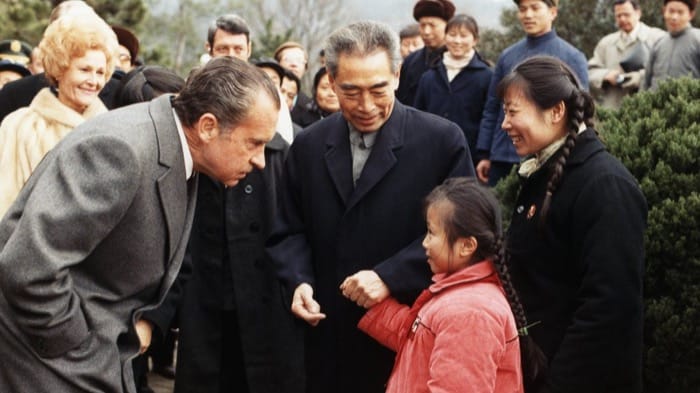
It was, in the words of President Richard Nixon himself, the week that changed the world. On February 21, 1972, Nixon embarked on an eight-day visit to communist China — a historic move that no U.S. president had undertaken since the People's Republic of China was established in 1949. Given the deep ideological gulf separating the two nations, few observers anticipated that America would seriously pursue improved diplomatic relations with China.
The United States, at that point, had virtually no meaningful relationship with China. The Soviet Union, however — itself a communist nation — did. With the Cold War at its peak, American leaders were keen to curb Soviet influence around the globe. Beyond that, the U.S. sought a resolution to the Vietnam War; while China wasn't formally a participant in the conflict, it was backing the North Vietnamese. There was also the matter of Taiwan, where the U.S. hoped to find a peaceful path forward. With all of these considerations in play, the decision was made: Nixon would undertake the bold step of traveling to China personally to address these pressing concerns.
The visit proved largely successful in meeting Nixon's objectives. Out of the trip came the Shanghai Communique — essentially a mutual pledge by both nations to look past their differences and begin the process of normalizing their relationship. The journey left such a mark on the political imagination that "Nixon going to China" evolved into a widely used idiom, describing a politician who takes a completely unexpected action in pursuit of a major breakthrough.