
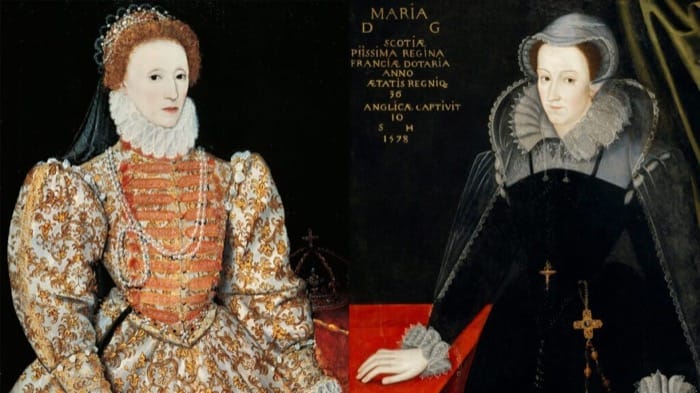
She spent nearly twenty years wrestling with the decision. But on Feb 1, 1587, Queen Elizabeth I finally put pen to the death warrant of her cousin Mary — the legitimate sovereign of Scotland and, by many arguments, the rightful heir to the English Crown itself. Just one week later, on Feb 8, 1587, Mary, Queen of Scots, lost her head on the executioner's block. Even after close to five centuries, Mary's fate continues to fascinate us. The lingering questions around her death open a window into one of history's most gripping tales of political scheming and, quite possibly, deep-seated paranoia.
Who Was Mary Queen of Scots?
On the official record, Mary went to the block for conspiring to murder Queen Elizabeth I. Court documents from her trial revealed her involvement in the Babington Plot — a scheme designed to place Mary on the throne. Intercepted correspondence between Mary and the Roman Catholic nobleman Anthony Babington served as the damning evidence against her. The verdict was treason, and the sentence was death. Yet there was a glaring complication — executing a member of the royal family was considered deeply forbidden.
The uncomfortable truth for Mary was that her very identity made her a perpetual threat to Queen Elizabeth I's grip on power. Crowned Queen of Scotland while still an infant, Mary spent her formative years in France while regents governed her homeland. Her marriage into French nobility was viewed by some as a dangerous move, given the fraught political tensions between France and England at the time. When Mary eventually returned to Scotland to assume her throne, she was overpowered and compelled to give up her crown. She then escaped to England, only to spend about nineteen years locked away by Elizabeth I. The reason for her long imprisonment was straightforward — Mary possessed a remarkable ability to rally devoted followers to her cause.