
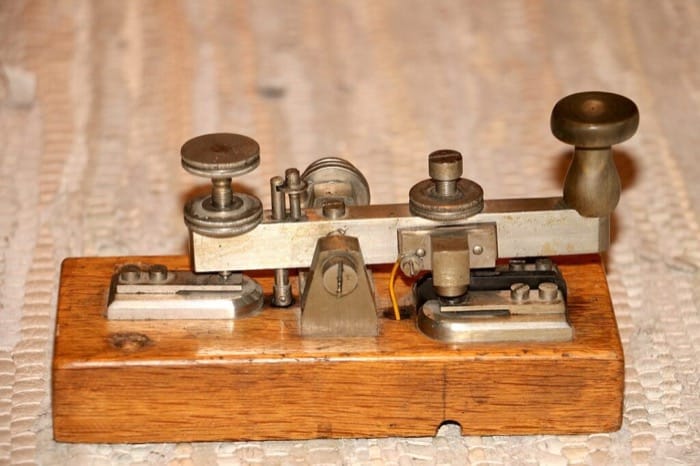
It's hard to overstate what happened on January 11, 1838 — in many ways, it was the moment the modern world began to take shape. That was the day the telegraph received its first public demonstration, an invention destined to fundamentally transform how humanity communicated. Suddenly, messages no longer had to travel at the plodding speed of people and horses. Instead, they could fly across hundreds or even thousands of miles almost instantaneously. As the earliest piece of modern communications technology, the telegraph paved the way for everything that followed — the telephone, the radio, and eventually the internet.
Before he became the father of this revolutionary device, Samuel Morse was a painter by trade. It was only after spending a few years studying art in Europe that his life took an unexpected turn. Back in Boston, he watched an expert demonstrate the newly discovered phenomenon of electricity, and something clicked. Morse became convinced that if messages could be translated into a simple binary format of ones and zeroes, electricity could carry them across vast distances at remarkable speed. With that vision driving him, he dove into teaching himself the science of electricity, began crafting the encoding system that would eventually carry his name, and set about designing a machine capable of bringing the whole concept to life.
The road from idea to reality proved rockier than Morse had anticipated, though. His early device simply didn't perform well enough. It took the involvement of Alfred Vail, a skilled engineer, to refine the telegraph into something commercially viable. Once that collaboration bore fruit, Morse was ready for the big reveal. On January 11, 1838, at the Speedwell Ironworks in Morristown, New Jersey, he presented his creation to the world for the first time.