
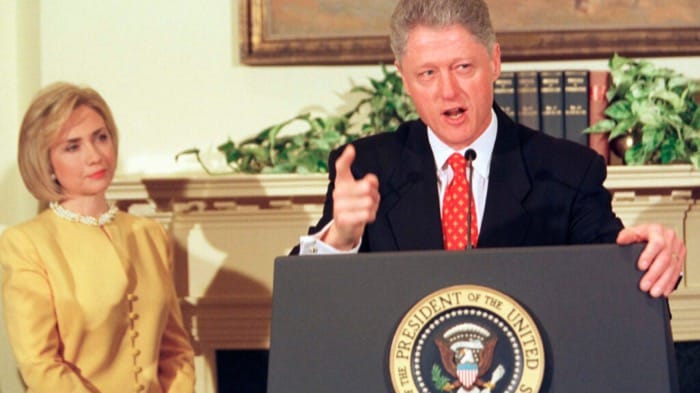
When Bill Clinton stood before reporters at a White House press conference on January 26, 1998, he delivered a denial that would become etched in American political history: "I did not have sexual relations with that woman, Ms. Lewinsky." The story had already broken roughly a week earlier, on January 17, though the controversial encounters between Clinton and Lewinsky had actually taken place between November 1995 and March 1997. According to Lewinsky, nine explicit encounters occurred during that period.
A scandal involving a public figure was hardly unprecedented in the world of politics, but when the person at the center of the storm happened to be the President of the United States — someone wielding extraordinary power and commanding global recognition — the media frenzy was explosive. Sensationalism saturated much of the coverage, and Lewinsky bore the brunt of outright bullying and misogyny in the press. Clinton certainly faced his share of harsh criticism as well, but the venom directed at Lewinsky was disproportionately intense by comparison and has persisted far longer than the backlash aimed at the then-president.
For all the questionable reporting and commentary that surrounded the affair, the scandal did spark something unexpectedly valuable: a surprisingly frank national conversation. People openly debated what behaviors constituted infidelity, what age differences were considered acceptable, and how power imbalances in the workplace shaped relationships.
Today, Bill Clinton has largely moved past the scandal. Monica, on the other hand, has continued to endure considerable bullying and public harassment — especially as social media has become ubiquitous. Even so, she has forged her own path forward, channeling her experiences into work as an anti-cyberbullying activist.