By early 1775, the fledgling American Revolution seemed in danger of collapsing before it truly began. Taking up arms against the British government was an enormous leap, and many colonists simply weren't ready to make it. A large number of them didn't oppose Britain outright — their grievances centered on how the country managed the American Colonies. Against this backdrop of uncertainty and fractured opinion, Patrick Henry delivered what would become one of the most celebrated speeches in American History.
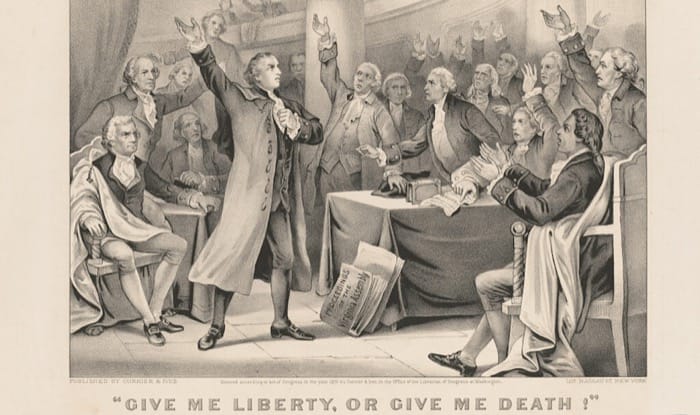
The Second Virginia Convention gathered in a church to deliberate and cast their votes on how to proceed. A good number of attendees held out hope that the British Parliament might reverse course on its colonial policies, while others believed some form of compromise was still achievable. It was at this moment that Patrick Henry, a lawyer and politician, rose to address the assembly.
Henry possessed a remarkable talent for oratory, and he wielded it to powerful effect. Standing before the gathering, he began by expressing genuine respect for those who remained optimistic or favored negotiation — but then firmly argued that their position was misguided.
The colonies, he emphasized, had repeatedly sought compromise only to be dismissed by the British at every turn. He passionately urged the formation of neighborhood militias, prepared to confront the British at a moment's notice. His speech culminated in words that would echo through the centuries: "Is life so dear, or peace so sweet, as to be purchased at the price of chains and slavery? Forbid it, Almighty God! I know not what course others may take, but as for me, give me liberty or give me death!"
The effect on his audience was electrifying. The vote came down in favor of revolution.