
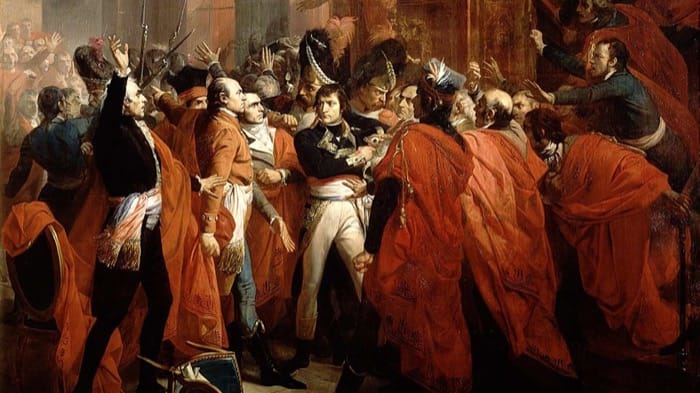
Born Napoleon di Buonaparte, the man who would reshape France clawed his way to the pinnacle of power on November 9, 1799. His vehicle for seizing control? The now-legendary Coup 18 Brumaire. His name echoes throughout French history for good reason — Napoleon was a military prodigy of extraordinary caliber, climbing the ranks at a pace that stunned his contemporaries. By the age of 24, he had already earned the rank of general, and from there, he went on to take command of the French army itself.
The Coup 18 Brumaire
Pulling off the Coup 18 Brumaire was not something Napoleon Bonaparte managed alone. Two influential political figures — Abbe Sieyes and Talleyrand — played essential roles in making it happen. The scheme began when Abbe Sieyes deliberately spread a false rumor about an imminent Jacobite uprising, which created enough alarm to justify relocating the government. Napoleon then stepped in with a proposal: the government should reconvene at Saint-Cloud. Once removed from the protective environment that Paris provided, the government found itself vulnerable. Napoleon seized the moment, intimidating officials and declaring the republic dissolved. He compelled the upper house to formally decree the end of the existing government, and in the same stroke, installed himself as the new head of state.
Seizing French power
There was no democratic vote behind Napoleon Bonaparte's rise to Emperor of France. What there was, instead, was a meticulously orchestrated coup that handed him dictatorial authority. Through the Coup of 18 Brumaire, Napoleon secured complete autonomy over the French government and moved swiftly to consolidate his grip. He established The Consulate — a freshly minted government structure with himself firmly at the top. To reshape the nation's legal framework, he brought in four jurists tasked with overhauling the French legal system. It was only after this new governmental apparatus was firmly in place that Napoleon Bonaparte officially claimed the title of first consul.