
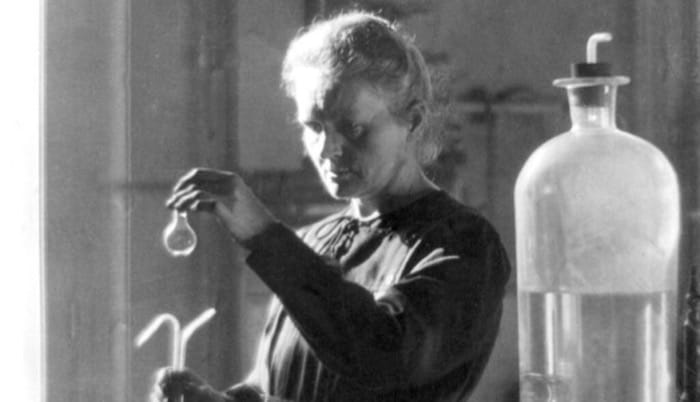
It was on December 21st, 1898, that Marie and Pierre Curie — a married team driven by relentless curiosity — made their landmark discovery of Radium. The breakthrough hadn't come overnight; it followed years of painstaking experimentation involving various crystals and Magnesium. What they uncovered that day would go on to fundamentally reshape the world we live in.
The story of their partnership began at the School of Physics in Paris, where Pierre served as a professor and Marie was a student. Romance blossomed quickly, and the two love birds tied the knot in 1895. But their path to discovering Radium wasn't walked alone — Henri Becquerel, a close colleague of the couple's, played a crucial role in setting events in motion. It was his presentation that captured Marie's attention and sparked the journey that followed.
The element first revealed itself in the form of radium chloride, a compound that Marie and Pierre successfully extracted from Uraninite. Here's how the process unfolded: they began by isolating Radium Chloride from the Uraninite, but after separating the two compounds, something remarkable became apparent — the leftover matter continued to emit radioactivity. Determined to identify which element was responsible for the deadly radiation, they subjected the substance to further analysis. Before long, they pinpointed Radium as the radioactive element they had been hunting. Adding to the intrigue, the couple also detected unfamiliar spectral lines known as Crimson Carmine, which were later confirmed to be invariably emitted by the Radium Chloride.
With this groundbreaking discovery in hand, the couple delivered a stunning presentation before the French Academy of Sciences. Five years later, their efforts earned them the most prestigious prize in the world— the Nobel Peace Prize. Marie Curie made history as the first woman to claim the coveted award. She would later secure a second Nobel peace prize, this time for her works in Chemistry, cementing her legacy as the first person to achieve this extraordinary feat of excellence.