
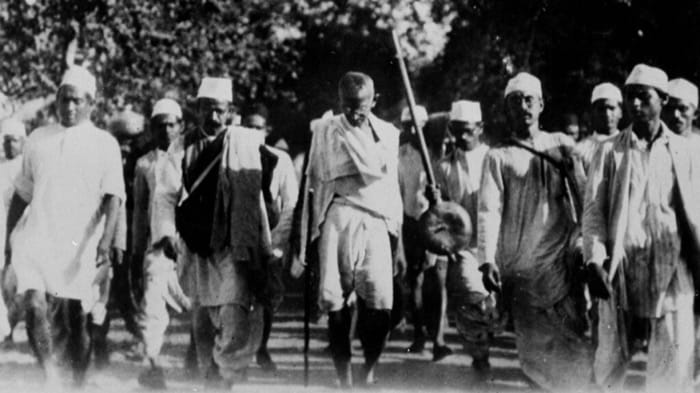
On March 12, 1930, Mahatma Gandhi set out on foot from his ashram in Sabarmati alongside 78 followers, embarking on a 241-mile trek toward the coastal town of Dandi. His goal? To collect salt directly from the seawater — a simple act that carried enormous political weight. In Gandhi's eyes, this was the most effective way to challenge Britain's stranglehold on India.
By this time, Britain had maintained control over India for a long period, leveraging its political authority to squeeze as much wealth as possible from the land and its people. Among the tools of this exploitation were the Salt Acts — legislation that made it illegal for Indians to collect or sell salt on their own. The result was that Indians had no choice but to purchase salt from Britain at prices that were outrageously inflated. Gandhi's ultimate vision was an India liberated from British control and exploitation, but he recognized that taking on such a vastly superior military power through armed conflict was not a viable path. Instead, he chose nonviolent resistance as his strategy. His calculation was shrewd: if Britain responded harshly to peaceful protesters, the international community would take notice, and the resulting pressure could eventually force Britain to grant India its freedom.
This march to Dandi was the symbolic launching point of that broader campaign. Gandhi planned to openly defy the British Salt Acts upon reaching the coast, hoping his bold stand would inspire a groundswell of nonviolent civil disobedience across India. And that is exactly what happened. What began as a protest against the Salt Acts at Dandi ignited a nationwide movement, rapidly expanding into widespread peaceful defiance of numerous other British laws — a tide of resistance that ultimately contributed to India's liberation.