
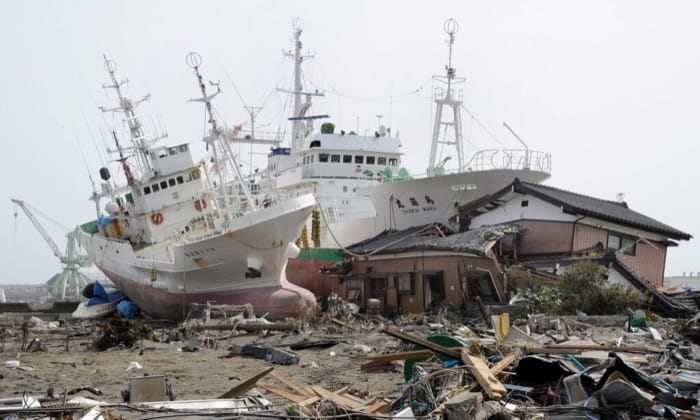
A devastating 9.0 magnitude earthquake rocked a spot 45 miles east of the Oshika Peninsula of Japan on March 11, 2011, setting off a catastrophic series of events. The quake itself ranked as the fourth most powerful earthquake in modern history — and its sheer force was staggering. It pushed the entire island of Honshu (Japan's main island) 8 feet to the east and even shifted the axis of the Earth's rotation by as much as 10 inches. The destruction it unleashed across Japan was beyond measure.
What followed was an equally terrifying tsunami born from the earthquake's energy. Surging as high as a 12 story building and racing forward at 435 miles per hour, the wall of water slammed into Japan's coast with such violence that it pushed 6 miles inland. People had mere minutes to flee. Only a handful made it to evacuation centers, and even those proved inadequate — the tsunami was powerful enough to sweep many of them away entirely. Making matters worse, sudden snowfall and freezing temperatures severely hampered rescue operations.
The Fukushima Daiichi Nuclear Power Plant suffered critical damage from the quake as well, with three of its reactors going into meltdown. Massive quantities of radioactive water poured into the ocean. Hundreds of thousands of residents were forced to evacuate, and the surrounding land was rendered uninhabitable for many miles.
The aftermath didn't stop with the reactor meltdowns, either. Across the region, land subsided by as much as three feet — a change that leaves the area permanently vulnerable to flooding in the future.
When the final toll was assessed, nearly 20,000 people had perished in the disaster, with thousands more still missing. Japan will feel the repercussions of this catastrophe for a long time to come.