
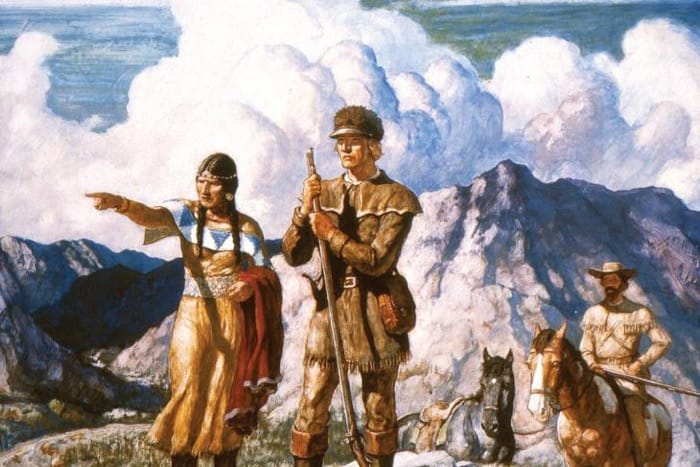
On November 7, 1805, "great joy in camp" — that's what Captain William Clark scribbled in his notebook. He was convinced the Lewis and Clark Expedition had finally laid eyes on the Pacific Ocean. After such an extended journey through the wilderness, one can only imagine how profoundly elated they must have felt.
Here's the thing, though: Lewis and Clark may not have actually glimpsed the ocean on that November day. The evidence suggests that on November 7, 1805, the Expedition still had roughly twenty miles to go before reaching the Pacific Ocean.
Weeks of paddling down the Columbia River had brought Lewis and Clark to terrain that looked noticeably different from what they'd encountered before. It is believed the Expedition eventually arrived at the spot where the Columbia flows into Gray's Bay.
A telling detail comes from the Expedition's decision to name Pillar Rock — a striking basalt column that juts fifty feet above the bay. Gray's Bay itself proved to be a treacherous, storm-battered brackish estuary, and the Expedition had no choice but to hunker down for a full week while waves kept them trapped in camp.
Crossing that estuary turned out to be impossible without assistance from indigenous peoples. It was the Clatsop people, skilled navigators of ocean-going canoes, who had mastered the ability to handle the brutal weather of the Pacific Northwest.
The Expedition's logs even contain an account of Sacagawea becoming seasick during the attempt to cross the estuary.
It wasn't until November 24, 1805, that Lewis and Clark at last stood before the open Pacific Ocean.
As generations of American school kids have learned, the Lewis and Clark Expedition stands as a testament to Americans' determination to see a daunting challenge through to the end. Their mission was to find the legendary Northwest Passage — a sea lane stretching across the American continent.
As for November 5, Clark may very well have spotted the Pacific Ocean from beyond Gray's Bay. But Gray's Bay has its name for a reason.