
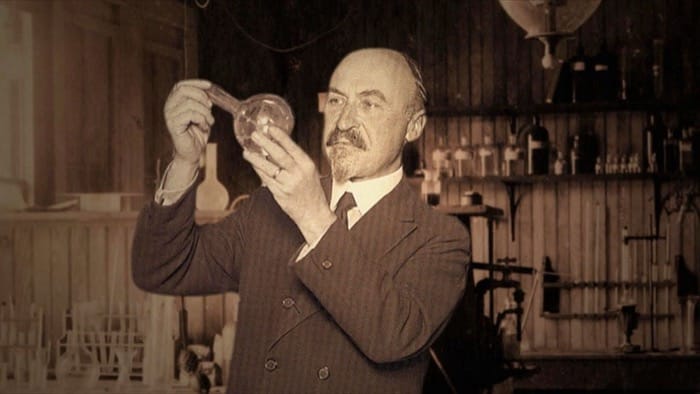
From photographer to pioneering chemist — Leo Baekeland's journey is one of the most fascinating pivots in industrial history. After leaving Europe and settling in New York City, he initially made his mark in photography. A gifted scientist and inventor, Leo Baekeland created Velox, the first commercially successful photographic paper, building on his own photographic paper invention. In 1899, George Eastman of the Eastman Kodak Co. purchased Nepera — the corporation belonging to Baekeland and his business partners — for $750,000.
Now financially comfortable, Baekeland chose to pursue research from the privacy of his own house. There was a catch, though: the selling deal with Kodak included a promise that Baekeland would stop developing photography technology, which meant he needed to explore an entirely different field. True to the philosophy behind Velox, he looked for an issue that offered him "the greatest opportunity for the fastest possible solutions." And what drove him toward synthetic resins? By Baekeland's own admission, he wanted to earn more money.
By the early 1900s, chemists had already identified natural resins and fibers, yet all attempts to reproduce them in a laboratory environment had ended in failure. What set Baekeland apart was his thorough understanding of past research, which allowed him to approach his experiments in an organized and well-documented way. He carefully controlled and varied the impact of many variables — temperature, pressure, and both the type and amount of phenol. His breakthrough came through polyoxybenzylmethylenglycolanhydride synthesis, which delivered exactly what he had been hoping for. The resulting material, Bakelite, is produced by combining resin with additives such as wood and asbestos before being formed into a final shape.
The Science Museum Group's exhibition of Baekeland's work speaks to his lasting impact in putting this fresh stuff to use. He submitted his procedure patent for manufacturing insoluble compounds of phenol and formaldehyde in July 1907, and it was officially awarded on Dec 7, 1909.