
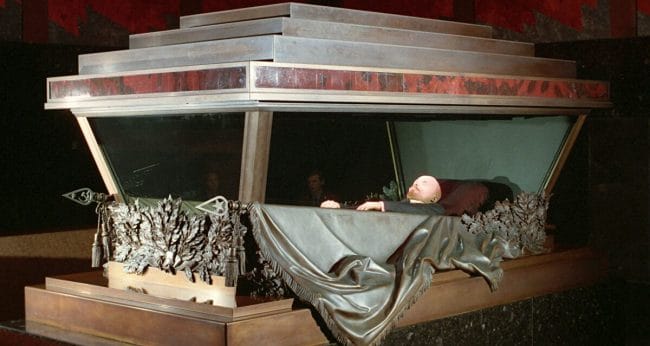
Within Moscow's Red Square stands a mausoleum housing the embalmed remains of Vladimir Lenin, preserved in a glass sarcophagus for all to see. This site has become a prominent tourist destination, embodying an era of Russian history that many modern Russians look upon with pride. For others, however, it serves as a stark reminder of Soviet Communism and the citizen oppression that accompanied it.
With Lenin's mausoleum approaching its 100th anniversary, it's notable that the old Communist Party of the Soviet Union hasn't vanished entirely. Russia's Communist Party continues to participate in politics, though it consistently falls short in presidential elections each cycle. Not long ago, the mausoleum welcomed visitors again after being closed, though attendance was modest — largely a consequence of Covid 19.
Who Was Vladimir Lenin?
Lenin's body was placed in a mausoleum in Red Square on Jan 27, 1924, where it has remained on permanent display ever since, accessible to anyone making the journey to Moscow and the Red Square. His legacy is most closely tied to the Russian Revolution, a transformative period when the Russian people cast aside the bonds of peasant hood and forged a new national identity rooted in statehood and collective pride.
Though the Soviet Union itself has ceased to exist, Lenin is widely regarded as the father of modern Communism by most accounts. Some go further, crediting him as the founder of modern Russia precisely because of the Soviet Union he helped create. What earns him this extraordinary distinction? He spearheaded the 1917 Russian Revolution — no small feat by any measure. Lenin stands as modern Russia's founding father, even though the government he established has long since lost power. And yet, his mausoleum endures as a destination that continues to draw visitors.