
What if a well-meaning king simply wasn't up to the task? That was the tragedy of King Louis XVI of France. Despite his good intentions, he lacked the ability to govern a nation drowning in debt, repeatedly failing to push through the reforms his country so desperately needed. His decision to convene the Estates-General of 1789 only made things worse — the commoners' representatives seized the moment, declared themselves the National Assembly, and ignited the French Revolution.
From that point forward, the royal family found themselves in an increasingly dangerous situation, essentially held captive in Paris. Even so, certain revolutionary leaders still imagined a future in which Louis XVI could serve as a constitutional monarch.
That possibility evaporated when Louis XVI and his family attempted to flee to the royalist stronghold of Montmédy, hoping to rally foreign support for a counter-revolution. Their failed escape made it clear to everyone that armed conflict was now unavoidable.
Public sentiment toward Louis XVI deteriorated even more dramatically after Austria and Prussia released the Brunswick Manifesto — a provocative declaration vowing to restore his full authority, even if it meant killing anyone who stood in the way. For many, this served as undeniable proof that Louis XVI had been secretly working with foreign powers against the very people he was supposed to lead.
On August 13 of 1792, Louis XVI was formally placed under arrest. Some revolutionary leaders argued he should be kept alive as a bargaining chip. But that rationale lost its weight after French forces defeated the Prussians at the Battle of Valmy on September 22 of 1792.
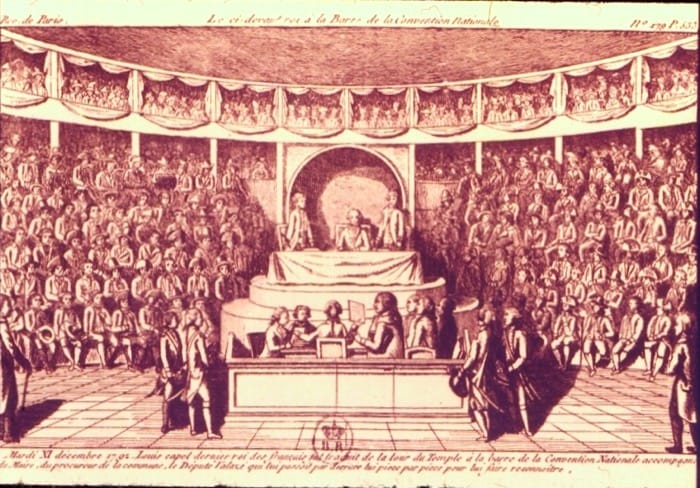
Buoyed by this military triumph and the subsequent discovery of damning documents, revolutionary authorities moved to put Louis XVI on trial for high treason and crimes against the state on December 11 of 1792. No one on either side harbored illusions about where this was heading — the evidence against him was so overwhelming that his execution was all but certain.