
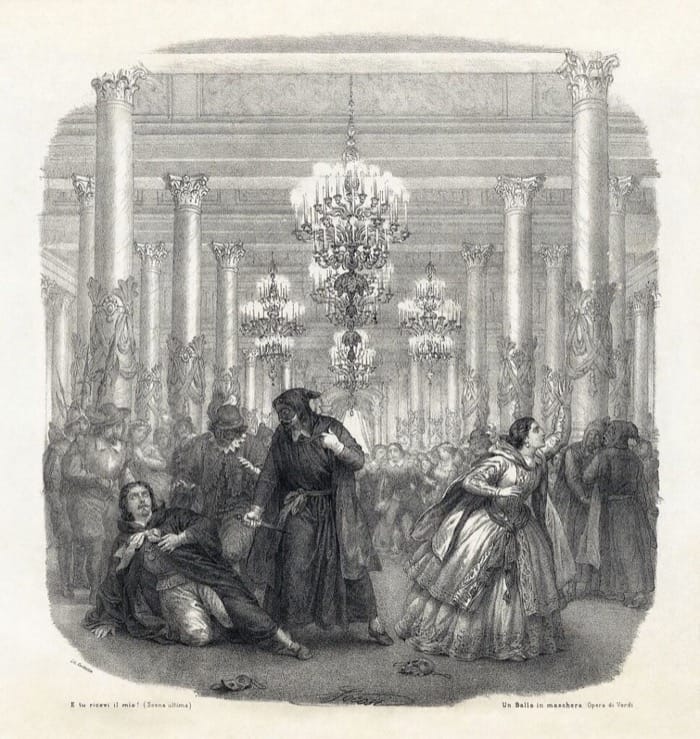
A night at the opera turned deadly on March 16, 1792, when King Gustav III of Sweden was shot while attending a performance at the opera house. The wound proved fatal — he lingered for two weeks before succumbing to his injuries. With his death, the bitter, long-running power struggle between the king and Sweden's aristocracy finally came to an end. Fittingly, it was the aristocracy itself that orchestrated his demise.
Two decades prior, Gustav had seized power through a coup d'etat against the Swedish Parliament, crowning himself king and effectively dismantling democracy in the country. His rule wasn't without accomplishments, though. He pushed through a number of social reforms: torture and the death penalty were scaled back, Judaism and Catholicism were legalized, new infrastructure was constructed, and a range of cultural projects received royal funding. Yet alongside these progressive measures, Gustav waged an unrelenting campaign to strip Sweden's aristocracy of their autonomy and bring them firmly under royal authority. Unsurprisingly, the nobles were far from enthusiastic about this agenda.
What ultimately transformed aristocratic resentment into a full-blown assassination plot were two key developments. First, Gustav adopted an increasingly belligerent posture toward Russia. Second — and perhaps more personally threatening to the nobility — he enacted legislation that concentrated most of their political power in his own hands. Facing what they saw as no other choice, both to shield their country from a disastrous war and to prevent their own slide into irrelevance, the Swedish nobles set a conspiracy in motion to kill the king.
The conspirators struck in 1792, choosing a masked ball at the opera house as the setting for their attack. In an attempt at cleverness that ultimately fell flat, they all donned identical masks — the idea being that no one could identify who actually fired the shot. Despite this precaution, every one of them was caught immediately. Ironically, the plot only succeeded at all because of Gustav's own hubris. He had actually received advance warning about the conspiracy but chose to attend the ball regardless.