
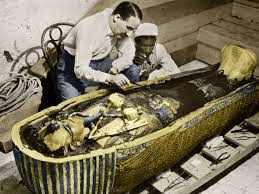
In the Valley of the Kings, Egypt, on November 4, 1922, British Egyptologist Howard Carter and his team launched their excavation of the tomb of Tutankhamun. Known widely as King Tut, this Egyptian pharaoh ascended to the throne at just nine years old in 1333 B.C., only to die a decade later. His youth at the time of death largely accounts for the faint impression he left on ancient Egyptian history. Following Egyptian tradition, King Tut's body was mummified and placed in a tomb brimming with jewelry, artwork, and treasures. Yet the shifting desert sands swiftly buried the site, concealing it from the world for more than 3,000 years.
It was on November 4, 1922, that Howard Carter, Lord Carnarvon, and the rest of their team uncovered the first step of a staircase that descended toward King Tutankhamen's tomb. What awaited them inside was nothing short of miraculous — sealed burial chambers that had survived the ages completely intact. Within lay several thousand priceless objects, among them the gold coffin that held the teenage king's mummy.
Why had Tutankhamen's tomb proven so elusive? The answer stretches back to the 13th century B.C., when Tutankhamen and the other "Amarna" kings were publicly condemned. This led to the destruction of most records associated with them, including information about the location of King Tuts' tomb. Making matters worse, workers constructing a mausoleum for Ramses VI about a century later inadvertently buried Tutankhamen's tomb beneath a deep layer of chips, effectively shielding it from any future discovery.
Following World War 1, Carter threw himself into an intensive search for King Tutankhamen's tomb — a quest that would ultimately prove successful. The pivotal moment arrived on November 26, 1922, when the team broke through the tomb's door. Carter famously described seeing wonderful things. Even so, the casket carrying Tutankhamen's mummy would not be revealed until much later.