
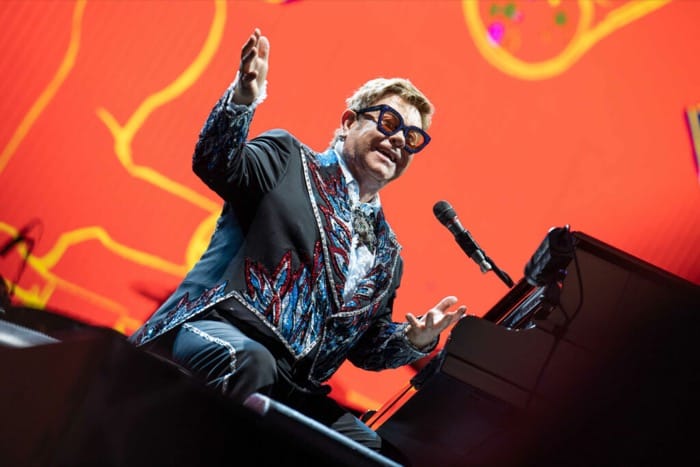
It was Elton John's fifth studio album, and when Honky Chateau dropped in 1972, it changed everything. On July 15th, 1972, the record climbed to the No. 1 spot in the United States, kicking off an extraordinary run of 7 consecutive chart-topping albums that would cement Elton John as one of the all-time greats.
The album's name drew inspiration from an 18th-century French chateau that doubled as the recording location, situated in Hérouville, 25 miles north of Paris. Recognized as one of the greatest albums of all time by Rolling Stone, the record benefited from the chemistry of Elton John's already well-established band, which lent the sessions an easy, relaxed feel — a calm creative atmosphere that ultimately fueled its chart-topping run on July 15th, 1972.
Rolling Stone heaped praise on the record, calling it "rich, warm, and satisfying" and declaring that it stood "head and shoulders above… current releases." To this day, it remains critically regarded as one of John's finest works.
Notably, Honky Chateau was the first Elton John album since his debut, Empty Sky, to do away with strings entirely — save for a brief contribution by violinist Jean-Luc Ponty on "Amy" and "Mellow." This stripped-down approach signaled a turning point for John, as he shifted in mood and tone, evolving toward a more vibrant global rock-star persona that only grew bolder with each passing decade.
The album's US chart run was powered by massive hits that would become woven into music culture for centuries to come, including: "Rocket Man", "Honky Cat" and "Hercules" (although the latter was prepared, yet never materialized into a release).
For months, Honky Chateau held firm in the top 10, and it proved to be a career-defining moment for Elton John — the record that launched him into the stratosphere as one of the biggest celebrity musicians in the world.