
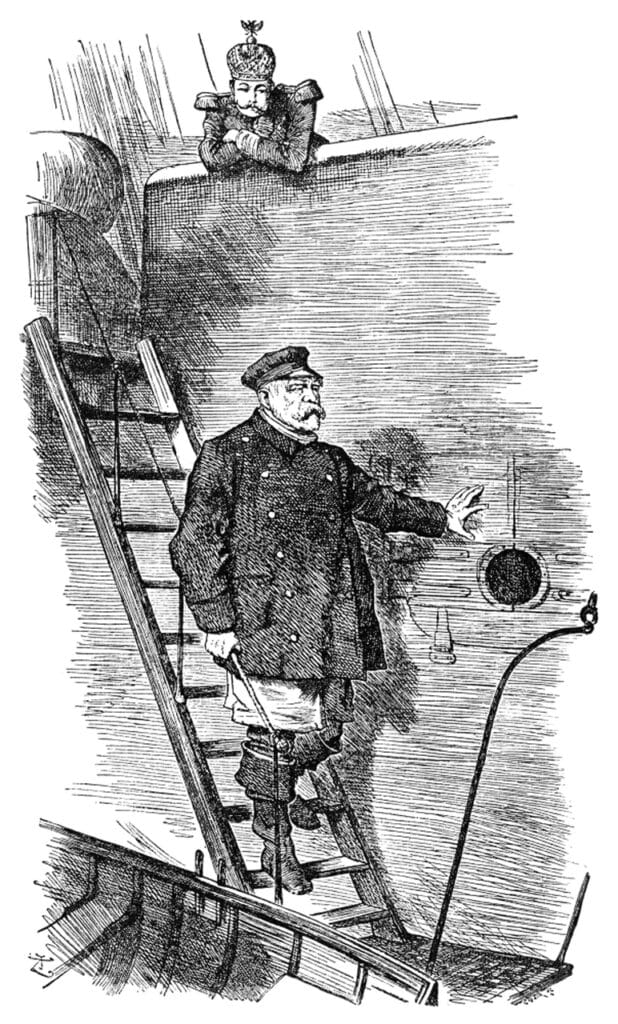
The date was March 18, 1890, and German Chancellor Otto von Bismarck was stepping down from power — at least, that's how it looked on paper. The truth was far less dignified: Kaiser Wilhelm II had effectively pushed him out. This dramatic rupture between the two men brought the curtain down on what had been among the most dominant political careers in 19th century Germany.
Back in 1862, Wilhelm I had tapped Bismarck to serve as Minister-President of Prussia, launching a remarkable era of statecraft. Through successful military campaigns against Denmark, Austria, and France, Bismarck played a central role in forging the German Empire in 1871. Once he had secured the power he sought for Germany, he shifted his focus to preserving peace — and turned out to be even more skilled at diplomacy than at warfare. No one could match his command of multilateral negotiations, and he repeatedly steered the European powers away from conflict through numerous tense and precarious moments. All the while, he worked tirelessly to expand Germany's power and influence at every opportunity.
Wilhelm II, however, found Bismarck's measured tempo frustrating. Wilhelm I had passed away in 1888, and his successor, Friedrich III, reigned a mere 99 days before succumbing to cancer. The young Wilhelm II, now on the throne, had no appetite for Bismarck's careful, deliberate style of foreign policy. What he craved was bold, aggressive action that would quickly grow Germany's territory and global standing.
The two locked horns on this fundamental disagreement and on plenty of other issues — among them, Bismarck's push to violently suppress German socialists. As tensions escalated, Bismarck flatly refused to cooperate with Wilhelm and began publicly mocking him. Wilhelm responded by making unmistakably clear that Bismarck's time in power had come to an end. Bismarck did write a blistering letter of resignation, but he ensured it would only see the light of day after his death.