
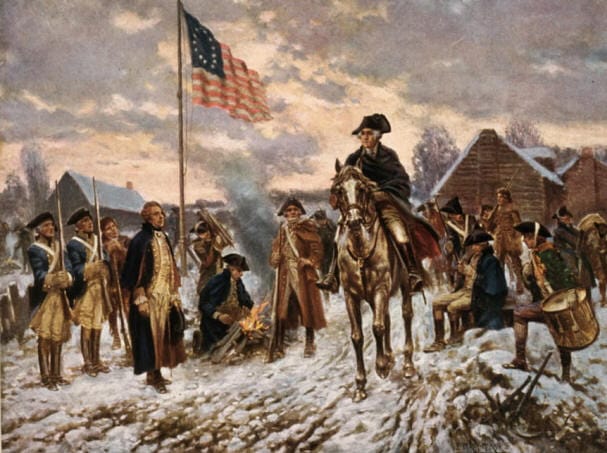
A ferocious snowstorm slammed into George Washington and his Continental Army forces stationed at Morristown, New Jersey on January 4, 1780. The Revolutionary War had already been raging for six years at that point, and Morristown had been selected as the site where the army would make its winter encampment. Soldiers throughout the war endured conditions that were notoriously wretched, and the extraordinary severity of that particular winter only made matters worse. Bitter cold gripped the camp, biting winds cut through everything, and snow accumulated to depths reaching twelve feet in some areas.
Months later, on March 18th, with the punishing winter still holding its grip, George Washington penned a letter to Marquis de Lafayette in which he declared: "The oldest people now living in this Country do not remember so hard a winter as the one we are now emerging from. In a word, the severity of the frost exceeded anything of the kind that had ever been experienced in this climate before."
Revolutionary War doctor and surgeon James Thacher, who found himself encamped at Morristown alongside the troops, recorded his own account of the snowstorm in his journal: "The weather for several days has been remarkably cold and stormy. On the 3rd instance, we experienced one of the most tremendous snowstorms ever remembered; no man could endure its violence many minutes without danger to his life."
By this stage of the fight for independence, Congress had completely depleted its resources, and the Continental Army bore the heavy consequences. The brutal weather only deepened the already dire hardships confronting the soldiers. Those who endured the winter at Morristown would later describe themselves as "starving," recalling stretches of multiple days with no food whatsoever — and periods of such desperate hunger that they resorted to gnawing bark from trees.