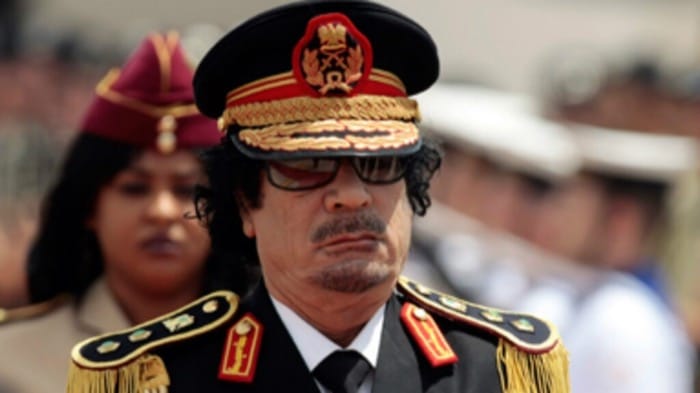
On January 16, 1970, just four months after spearheading a revolt that toppled the governance of King Idris 1, Gaddafi rose to become chairman of the Revolutionary Command Council — the governing body that held power at the time. The dynamic and gifted 27-year old colonel, Muammar Gaddafi, had already established the Libran Arab Republic on September 1, 1969, seizing the role of Libran Prime Minister by forcefully removing Civilian Lawyer, Mahmud Suleiman Maghribi, from power.
In the wake of this upheaval, a collective of 70 young and driven military officers — calling themselves the Free Officers Movement — took control of the Libyan Government. Remarkably, the Bloodless coup unfolded in Benghazi and wrapped up in a mere two hours.
Gaddafi's anti-Western dictatorship leadership style wove together Arab nationalism, Islamic orthodoxy, and revolutionary socialism, which he leveraged to exercise Jewish and Italian Libyans. He also deployed the same governing tactics and military apparatus to force the removal of British and U.S. military bases from Libyan soil.
That same year, Muammar Gaddafi released his first version of the Green Book — a work he considered a masterpiece that laid out the shortcomings of capitalism and liberal democracy while presenting his own philosophy as the much-anticipated solution. Once firmly in power, Gaddafi severed ties with Western nations and instead cultivated stronger relationships with African and Middle East countries. Through the use of military forces, he pressured the foreign petroleum companies that controlled Libya's oil reserves into renegotiating their contracts. This bold move made Libya the first-ever developing country to secure better deals from its oil production.
The approach Gaddafi took in seizing power drew heavy inspiration from Gamal Abdel Nasser, who served as Egyptian President at the time. Both men followed a strikingly similar path rooted in regional Arab nationalism — ascending to Presidency roles after spending years building their careers within the Military.