
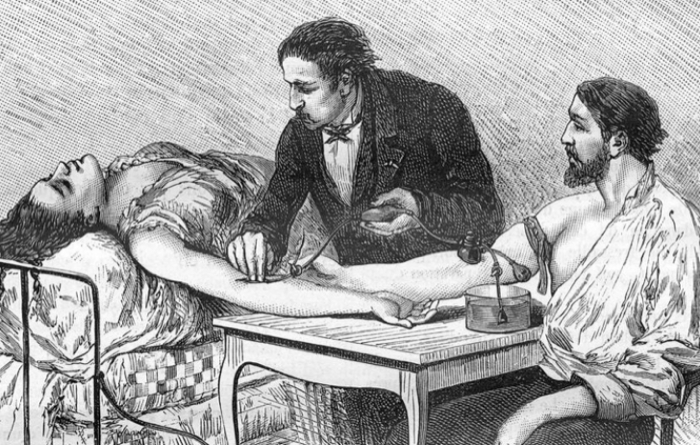
On March 27, 1914, medicine took a giant leap forward when the first successful modern blood transfusion was carried out. People had been trying to transfer blood between bodies for centuries, but every previous attempt was plagued by fundamental flaws in approach. Each effort ended in failure—until Belgian physician Albert Hustin introduced a breakthrough concept that would transform blood transfusion into a practical, life-saving medical procedure.
The earliest known transfusion attempt dates back to 1492, and it was nothing short of disastrous. All three donors perished, as did the patient. Making matters worse, the procedure never stood a chance of succeeding in the first place—practitioners tried administering the donated blood orally, reflecting a profound lack of modern anatomical knowledge. In the years that followed, researchers experimented with pumping animal blood into human recipients. Predictably, these efforts invariably killed the patients. It wasn't until 1818 that the medical community recognized the necessity of using human donors for human patients. That same year, a British physician by the name of James Blundell successfully completed the first human-to-human blood transfusion.
Even so, the usefulness of this technique remained severely limited. Blood coagulates once it leaves the body, which meant transfusions had to happen directly from donor to patient with no time in between.
That all changed with Dr. Hustin. His key insight was elegantly simple: by treating donated blood with sodium citrate, coagulation could be prevented, allowing the blood to be stored and used whenever the need arose. On March 27, 1914, he put this theory to the test and succeeded, performing the first non-direct blood transfusion in history. In doing so, Dr. Hustin ushered in the modern age of blood banks and blood drives—a revolution that has saved literally millions of lives.