
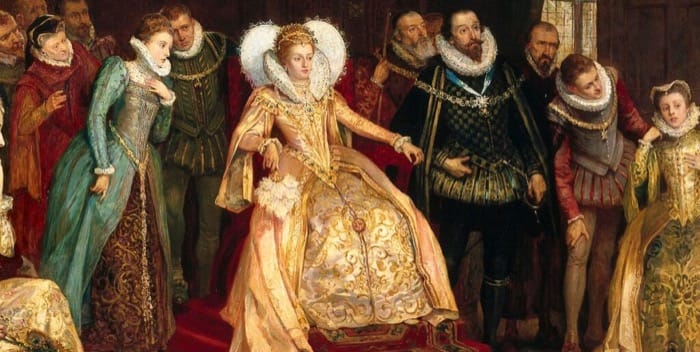
England was in the throes of dramatic political and religious upheaval in the period leading up to Elizabeth I's rise to power. Her father, King Henry the VIII, had thrown the nation into turmoil with his marital scandals, ultimately severing ties with the Roman Catholic Church and founding the Protestant Church of England.
After his death, his son Edward VI pressed forward with Protestant reforms and changes. Edward, however, died when he was just 15, leaving the throne to his sister Mary I, who stepped in as queen and ruler of England.
Returning England to Roman Catholicism, Mary I earned the grim nickname Bloody Mary. She sent more than 300 Protestants to burn at the stake, while countless others were driven from their homes and country. Although her half-sister, Elizabeth I did not oppose Mary, the queen's government and ruling over the people proved deeply unpopular and met with fierce opposition.
Illness struck Mary in May of 1558. On November 17, 1558, Elizabeth received word of her sister's death. Before passing, Mary had recognized Elizabeth as her heir.
On January 15, 1559, Elizabeth I was formally crowned in a coronation ceremony at Westminster Abbey. The House of Tudor gave England five monarchs, and she would be its last. Over the course of forty-five years, Elizabeth occupied the throne. Among her many titles, she was called the Virgin Queen, Good Queen Bess and Gloriana.
Having been educated as a Protestant, Elizabeth I restored the Church of England and kept peace throughout her country during her entire reign. In 1588, she triumphed over the Spanish Armada, sparing England from invasion. It was achievements like these that secured her reputation as one of the greatest monarchs of England.