
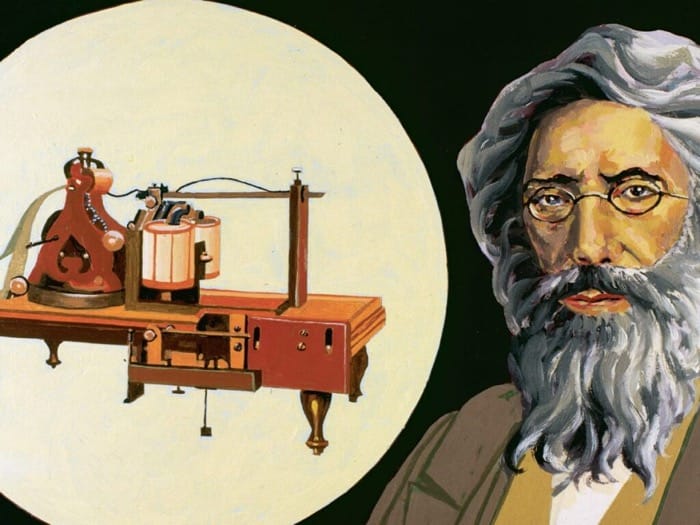
Back in 1838, Samuel Morse built the earliest version of what would eventually evolve into the electric telegraph. Using just a single wire, this prototype was soon put on display at Speedwell Ironworks in Morristown, New Jersey, where Samuel Morse and fellow inventor Alfred Vail teamed up to showcase the groundbreaking technology.
The demonstration relied on Morse code—a communication system built around combinations of dots and dashes standing in for letters and numbers. Vail would go on to play a critical role not only in transforming the telegraph from a rough prototype into a polished final product, but also in its commercialization, a process that would ultimately transform how people communicated across the United States.
At its core, a telegraph works by transmitting encoded messages as electrical impulses sent along a wire. The seeds of Morse's idea were planted in 1832, shortly after the electromagnet was discovered. What's fascinating is that other inventors were independently pursuing remarkably similar concepts around the same time, though many of those on the verge of breakthroughs didn't even realize they were essentially working toward the same goal.
It took eleven years after that first demonstration, but in 1843, Samuel Morse finally persuaded Congress to bet on his invention and fund construction of the first-ever telegraph wireline. Stretching from Washington D.C. to Baltimore, the line carried its inaugural telegram on May 24, 1844, sent by Morse himself. His now-famous message consisted of a single line: "What hath God wrought!"
The electric telegraph remained widely popular and in common use well into the middle of the 20th century, gradually fading only as newer forms of telecommunication emerged to replace it.