
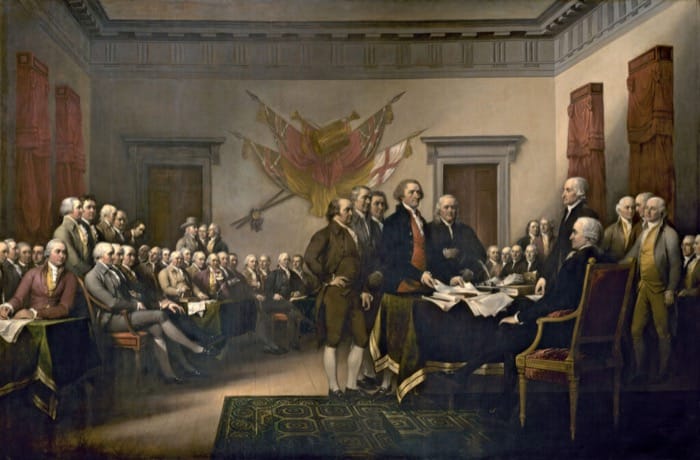
Few dates carry as much weight in American history as July 4, 1776 — the day Congress boldly declared independence from Great Britain. A committee that included Thomas Jefferson, John Adams, Benjamin Franklin, and others crafted a declaration making clear that the thirteen American colonies would no longer answer to Britain's King George III. That momentous act set the stage for a union of free and independent states.
Every year since Independence Day, July 4 has been a cause for celebration across the United States. It stands as a defining moment — a memorable epoch in the nation's story that continues to resonate deeply with the country's identity and history.
The road to independence was anything but smooth. Back in 1775, the people of New England had already launched their fight against British Rule, and momentum was building toward a break from the crown. Everything was well on course, and it was just a matter of time before the US became a free state. On July 2, 1776, Congress took the dramatic step of secretly voting in favor of independence from Great Britain. Then, two days later on July 4, 1776, the Declaration of Independence received its official approval, and the document was published for the world to see.
What makes July 4 particularly noteworthy is the careful attention given to Jefferson's Declaration of Independence, which underwent some minor changes that nonetheless preserved the spirit of the original document. The revision process proved challenging — work could not be wrapped up on July 3 and stretched all the way into the late afternoon of the following day. It was during that July 4th afternoon session that the declaration finally received its official adoption.
Getting there wasn't simple, either. Among the thirteen colonies, nine threw their support behind the declaration. Two colonies — Pennsylvania and South Carolina — objectified the order, while Delaware remained undecided and New York chose to abstain from the vote altogether.
Since that pivotal moment, July 4 has carried the designation of a national holiday honoring the birth of American independence. The Declaration of Independence was signed by John Hancock, who at the time served as president of the Continental Congress. The original copy of the document resides today in the National Archives of Washington DC.