
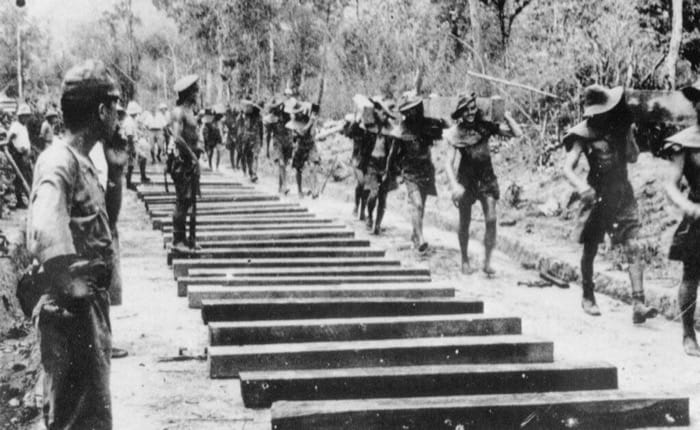
The Burma-Thailand Railway might strike you as a picturesque journey through stunning landscapes in destinations that remain off the beaten tourist path. Yet the story behind this rail line remains largely unknown to most people, its grim history overshadowed by the atrocities unfolding on European battlefields and the testimonies of Holocaust survivors.
During WWII, following the Japanese Army's conquest of portions of Southeast Asia, construction of the railway took place between 1942 and 1943. Thousands of Allied Forces prisoners of war were seized and sent to Burma, alongside local populations who were also taken hostage. Together, they were compelled to build a rail line stretching about 250 miles (400 kilometers) each way, running from Thanbyuzayat, Burma (modern-day Myanmar) to Ban Pong, Thailand. This massive undertaking served a dual strategic purpose: it would support Japan's planned invasion of India, which was at that time a British-owned colony, and it would establish a critical supply route enabling Japanese forces to move military equipment as they fought to dominate Southeast Asia and the Pacific islands.
The workforce endured grueling conditions through both the dry season, when temperatures climbed as high as 40 degrees Celsius (105 degrees Fahrenheit, and the drenching monsoon rains. Beatings at the hands of the Japanese were an everyday reality. Each day, hundreds perished from heat exhaustion, malnutrition, and untreated diseases that swept through the labor camps. A great many of those who lost their lives were only in their late teens to early twenties. Equipped with inadequate tools to carve into the cliff faces of surrounding mountains, laborers toiled through punishing 18-hour shifts on meager rations that left them with barely enough energy to survive the day — a truly brutal existence.