
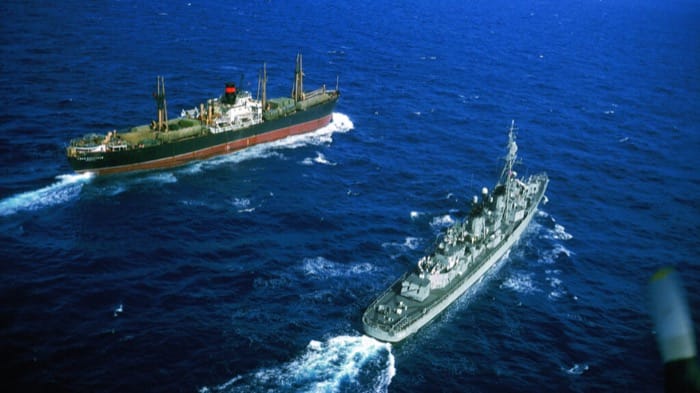
The events of October 24, 1962 marked one of the most pivotal moments during the Cuban Missile Crisis—a harrowing 13-day standoff between the U.S. and the USSR that brought the world dangerously close to nuclear war.
Soviet ships bound for Cuba were drawing near a naval blockade that American President John F. Kennedy had ordered into position. Only days before, Kennedy had learned that nuclear-armed Soviet missiles were stationed in Cuba, a mere 90 miles from U.S. shores.
Kennedy's blockade of U.S. vessels encircling Cuba had a clear purpose: to stop the Soviets from shipping additional missiles and military equipment to the island. After the public learned about both the missiles and Kennedy's decision to act, a wave of anxiety swept across Americans and people around the world as they awaited Soviet leader Nikita Khrushchev's next move.
Then came the moment of truth on October 24th—and the Soviet ships stopped short of the American naval blockade rather than trying to push through it. Had they attempted to breach the line, a military confrontation would have followed, one that could have spiraled rapidly into nuclear warfare.
While a devastating clash at sea had been narrowly sidestepped, the crisis was far from over. The missiles already installed on Cuban land remained a major threat to the Americans, and tensions between the two parties persisted in the days after the blockade.
A resolution finally came when Soviet leaders consented to dismantle and remove the missiles. In return, the U.S. issued a public announcement promising not to invade Cuba. On top of that, President Kennedy privately agreed to withdraw U.S. missiles from Turkey. This arrangement brought the Cuban Missile Crisis to a close on October 28, 1962. Over the year that followed, both parties went on to sign two treaties related to nuclear weapons.