
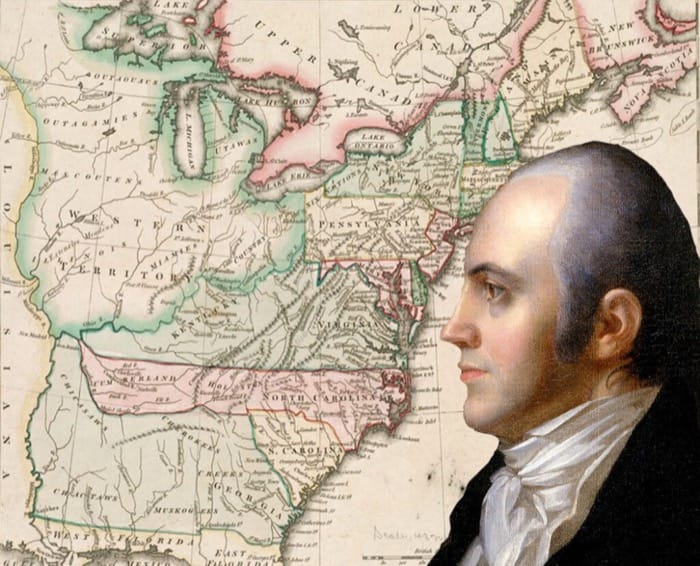
Aaron Burr, who served as Vice President during the Thomas Jefferson administration, was hit with treason charges on February 19, 1807 — accusations that would rock the young republic. At the heart of the matter was a sweeping alleged conspiracy: Burr had supposedly been working to recruit a coalition of influential businessmen, politicians, farmers, and military men with the goal of carving out an entirely new nation. The scheme, as alleged, involved severing the Southwestern United States from the Union and seizing Mexican territory in the process.
What Burr actually intended has never been definitively established, but certain facts remain undisputed. He had gathered a small army and accumulated supplies on Blennerhassett Island — that much was clear. The most damning allegations, though, originated with General James Wilkinson, an associate whom Burr had helped elevate to the position of Governor of the Louisiana Territory. In late 1806, Wilkinson moved against supposed co-conspirators, arresting them and pressing charges. He then forwarded to Jefferson a cipher that he attributed to Burr, one that allegedly laid out a plot to strike New Orleans and mount attacks on Mexico. Jefferson, who already harbored deep suspicion toward his former Vice President, wasted little time in issuing a warrant for Burr's arrest.
Word of these charges first reached Burr and his men at Bayou Pierre as they traveled toward New Orleans. Burr turned himself in to authorities, only to escape not long after formal charges were filed. His freedom proved short-lived, however — he was apprehended for the final time on February 19 of 1807.
What followed was a grueling, drawn-out trial where Burr's very life hung in the balance. Ultimately, though, Justice John Marshall handed down an acquittal, ruling that Burr had not committed treason as the constitution defined it. The legal victory may have spared his life in the most literal sense, but it could not salvage his reputation. The conspiracy accusations had shattered his public standing beyond repair, and Burr spent the remainder of his days far from the political arena, practicing law in relative obscurity.