
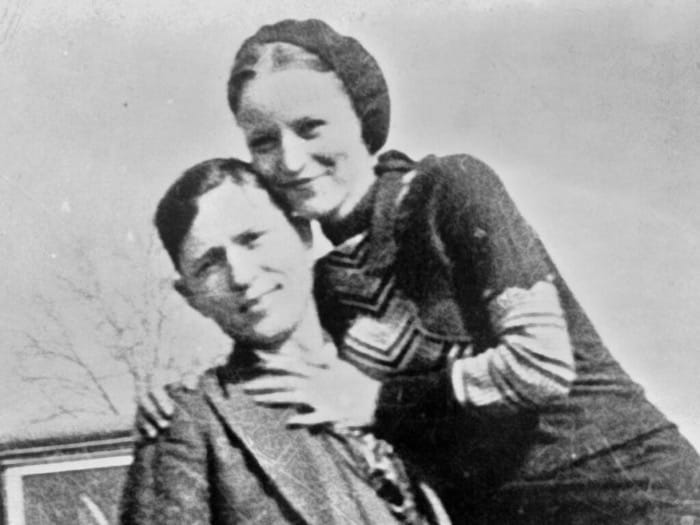
It was January 5, 1930, when Bonnie Elizabeth Parker crossed paths with Clyde Chestnut Barrow for the very first time — a meeting that would give rise to one of America's most notorious criminal partnerships. She was nineteen; he was twenty. According to most credible accounts, this fateful encounter happened at 105 Herbert Street in Dallas, Texas.
The house was the residence of Clarence Clay, a friend of Clyde's. At that time, Clarence was letting a female friend stay there while she recuperated from a broken arm. Bonnie, who happened to be unemployed and was also a friend of the injured woman, had decided to come stay at the house and help care for her during her recovery. It was during this stretch that Clyde dropped by to pay Clarence a visit.
Walking in, Clyde found Bonnie standing in the kitchen, preparing hot chocolate. The attraction between them was instantaneous — what many believe was a genuine "love at first sight" moment. A relationship quickly blossomed, and the two fell deeply for each other. This passionate bond ultimately led Bonnie to join Clyde's criminal outfit, the Barrow Gang. It's worth noting that most historians are convinced her motivation was rooted in her love for Clyde and her unwillingness to be separated from him, rather than any burning desire to pursue a life of crime.
Throughout the early 1930s, the Barrow Gang cut a path across the Central United States, building a reputation through a string of robberies and murders. While they gained particular notoriety for their larger-scale bank robberies, the gang actually tended to favor more modest targets — small stores and funeral homes among them. Operating primarily between 1932 and 1934, the gang is believed to have been responsible for the deaths of at least thirteen people, including nine police officers and four civilians.
Through it all, Bonnie and Clyde remained fiercely devoted to each other. They chose to press on with their outlaw existence, committing crimes side by side until they reached what they considered to be their inevitable and violent end.