
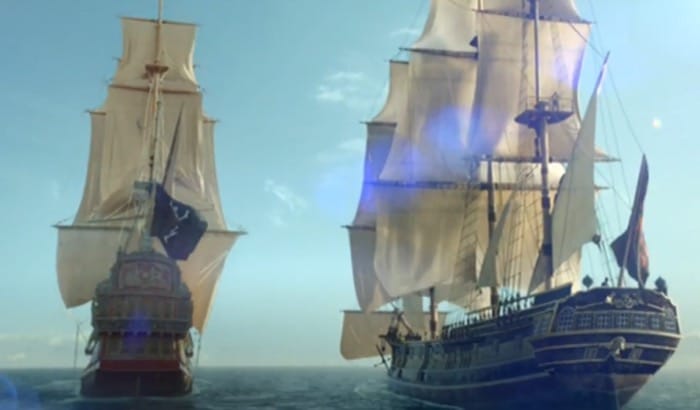
Perhaps the most infamous pirate to ever sail the seas, Blackbeard spent the early eighteenth century spreading fear across North American and Caribbean shipping routes. Despite his legendary reputation, surprisingly little is well known about his personal life and origins. It was on this day in history that he seized a French merchant slaving ship called La Concorde, transforming it into the vessel that would become synonymous with his reign of terror — the Queen Anne's Revenge.
The man behind the fearsome persona was named Edward Thatch or Teach, and he reportedly fought in Queen Anne's War (1701-1714). Once that conflict concluded, he made his way into a life of piracy. On November 28, 1717, while sailing toward the Caribbean, Blackbeard and his crew came upon the French slave ship La Concorde. The French vessel's crew found themselves in a dire situation — outnumbered, outgunned, and with many among them already weakened by dysentery and scurvy.
Facing Blackbeard's overwhelming force of around 150 men and 20 cannons, resistance proved futile. In fact, Blackbeard's men only fired two shots before Captain Dosset of the La Concorde gave up the fight. With the ship now in his possession, Blackbeard christened it Queen Anne's Revenge and sailed it to the Grenadines, where his crew offloaded the French sailors along with the African slaves who had been carried aboard as cargo.
What followed was a looting spree — the pirates stripped the vessel of its gold and compelled some French crew members to join their ranks. Over the next year, Blackbeard embarked on a campaign of rampant piracy, which reached its peak when he used the Queen Anne's Revenge to blockade Charleston port for almost one week.
The storied vessel met an unceremonious end when it ran aground while attempting to enter Old Topsail Inlet in North Carolina, after which it was abandoned. Just 6 months later, Blackbeard himself would meet his fate at the hands of the Royal Navy. As a grim trophy, his severed head was carried back to Virginia.