
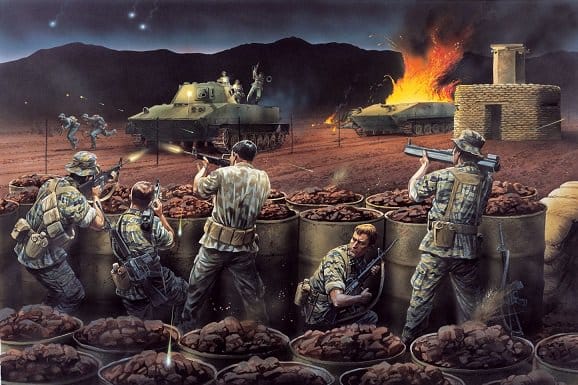
The Vietnam War — frequently called the Second Indochina War — stretched from late 1955 to early 1975, and most people would acknowledge it as one of the most emotionally charged chapters in American history. Yet across those 20-odd years of conflict, certain moments rise above the rest and demand closer examination. January 21, 1968, is undeniably one of them: the day the Battle of Khe Sanh began.
Before diving into why this date matters so much, it helps to get a sense of where Khe Sanh actually sits on the map. The location lies in South Vietnam, right along the border with Laos, a considerably smaller Southeast Asian nation.
Shedding Light on the Battle of Khe Sanh
If you're not deeply versed in every chapter of the broader Vietnam War, here's what you need to know: the Battle of Khe Sanh stands as the war's bloodiest period, claiming the lives of scores of U.S. and Vietnamese soldiers. It kicked off on January 21, 1968, when PAVN (People's Army of North Vietnam) forces launched a massive artillery bombardment targeting the U.S. The strike triggered a fierce response from both U.S. Marines and their South Vietnamese allies, setting off a brutal cycle of back and forth attacks that would persist for roughly 77 days.
When the dust settled, U.S. Marines — supported by their South Vietnamese allies — dismantled the base complex of Khe Sanh and ultimately pulled out of the battle area in July 1968. At its core, the entire confrontation boiled down to this: the PAVN sought to overrun the U.S.-based garrison — essentially a military fort designed to house troops and weapons — while American soldiers fought desperately to hold the line and stop that from happening.