
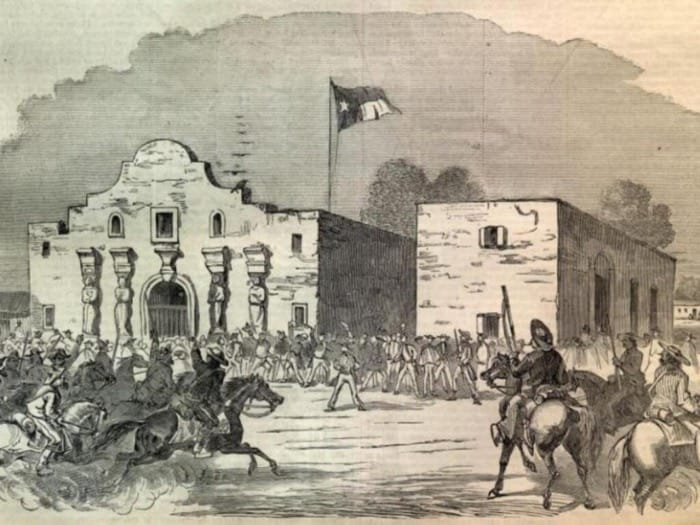
The clash at the Alamo, spanning from February 23 to March 6, 1836, stands as one of the most dramatic episodes of the Texas Revolution. President General Santa Anna led approximately 1800 Mexican soldiers across the Rio Grande with the Alamo garrison squarely in his sights. Facing this overwhelming force were Lieutenant Colonel William Travis and the renowned frontiersman James Bowie, commanding a Texas army of only an estimated 187 soldiers. Against staggering odds, these defenders managed to hold their ground for a remarkable 13 days.
When dawn broke on March 6, Mexican forces launched a massive assault on the fortification. Though the Texans successfully repelled the initial waves of attack, their insufficient troop numbers proved to be their undoing. Mexican soldiers eventually scaled the fort's walls, and after the grueling 13-day siege culminated in brutal close-quarters combat, the Alamo fell. Every remaining Texas soldier perished in the fighting, among them former Tennessee congressman David Crockett.
The toll on the Mexican side was far from light — roughly 600 casualties were suffered in taking the fort, even as the entire Texas army was destroyed. General Santa Anna spared a handful of Texans and dispatched them to Commander Sam Houston's camp in Gonzalez, carrying a grim warning: continued rebellion would bring the same fate upon all who resisted.
Yet the Alamo's fall proved to be a turning point rather than an ending in the Texas fight for independence. Rallying behind the battle cry "Remember the Alamo," volunteers surged to join Sam Houston, who led them to a decisive triumph over General Santa Anna at the Battle of San Jacinto on April 21, 1836. That victory would ultimately win Texas its independence from Mexico.