
The idea that our planet is spherical didn't originate with Christopher Columbus and his famous ocean voyage. Long before the navigator set sail across the blue ocean, Aristotle and fellow ancient Greek thinkers had already put forward the notion of a round Earth, drawing on various observations. One classic example: as ships depart from shore, they gradually shrink from view and appear to dip below the horizon — exactly what you'd expect if they were traveling across a curved, ball-like surface.
But what if the Earth wasn't a perfect sphere? That's precisely what Isaac Newton proposed. His theory described a planet that was flattened at the North and South pole while bulging outward around the equator — a shape known as an ellipsoid. While this contradicted what other researchers had claimed, Newton turned out to be right. The distance from the Earth's center to sea level is, in fact, greater at the equator than it is at the North and South poles.
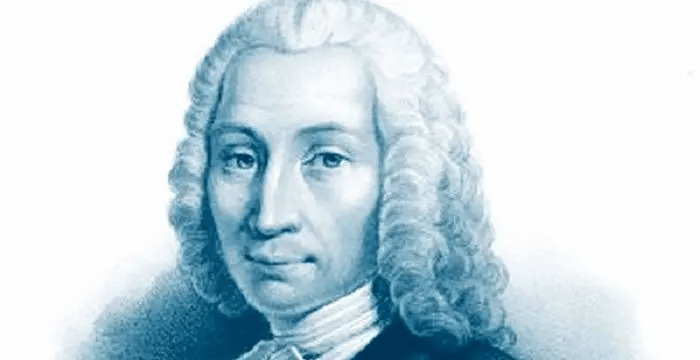
Having already devoted time to studying auroral phenomena, Anders turned his attention outward, embarking on journeys to Italy, Germany, and France. It was during his time in Paris that he crossed paths with Pierre Louis Maupertuis, a French Mathematician who was organizing an ambitious expedition to measure the north meridian. Drawn by his scholarly training, Celsius decided to join Pierre on this voyage, which launched on Dec 3 -1736. Throughout this period, he made frequent trips to London to secure the equipment necessary for the undertaking.
At its core, the expedition set out to challenge the Cartesian proposal that the Earth was spherical, and instead validate the Newtonian theory describing an ellipsoid shape. Celsius, a skilled astronomer, proved instrumental in the effort to measure the north meridian — ultimately helping to support and verify Isaac Newton's theory that Earth is an ellipsoid.