
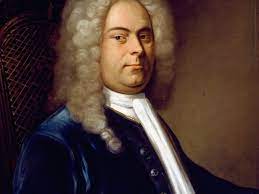
Born in 1685 and passing away in 1759, George Frideric Handel was a remarkable German-English composer whose life took a devastating turn when partial blindness struck him in 1751. This deteriorating eyesight dealt a serious blow to his musical career, making it incredibly difficult for him to complete "Jephtha," the final music piece he would ever write. When he sought help, Samuel Sharp, an eye specialist working at Guy's hospital, delivered a sobering verdict: surgery was the only path to correcting his condition.
Samuel went further, encouraging Handel to come to terms with his situation and suggesting he collaborate with John Stanley, a musician who had been blind from childhood. But Handel was unwilling to make peace with this reality — Samuel's recommendation struck a nerve. In response, Handel turned to scripture, citing the passage about a blind man leading another, with both ultimately tumbling into a ditch.
George Frideric Handel goes for surgery
When it came time to find a surgeon, the task fell to John Taylor — the very same man who had previously operated on Johann Sebastian Bach. Given Handel's stellar reputation, Taylor jumped at the opportunity, fully aware that performing surgery on such a celebrated figure could catapult him to fame. And as they say, bad publicity does not exist. Sure enough, Taylor did gain notoriety following the procedure — but tragically, Handel's condition only deteriorated further, going from bad to worse.
Handel is blind
By August 1752, Handel had lost his sight entirely. While blindness left him dependent on others for everyday tasks, his extraordinary memory proved to be his lifeline, allowing him to keep composing and performing music. According to experts, Handel's underlying condition was not cataracts but rather glaucoma. Despite this, Taylor had pushed forward with surgery that only introduced new complications. Making matters even worse, Handel summoned Taylor for a second operation six years later. Once again, the cataracts operation ended in failure.
Handel suffers stroke
The toll of his eye problems extended far beyond lost vision — Handel endured multiple strokes during his later years. The first of these strokes robbed him of the use of his right hand, which remained permanently paralyzed. As time went on, disorders of the mind began to set in. Specialists have suggested that Handel's deteriorating condition may have stemmed from vascular disease of the brain rather than cataracts.