
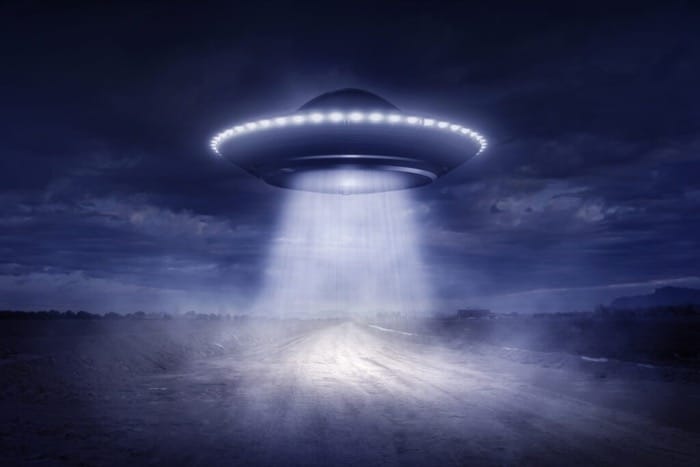
On the night of January 18th, 1644, something extraordinary unfolded over the waters near Boston — an event that would go down in history as America's first UFO sighting. John Winthrop, who served as governor of the Massachusetts Bay Colony, left a fascinating account in his diary:
"About midnight, three men, coming in a boat to Boston, saw two lights arise out of the water near the north point of the town cove, in form like a man, and went at a small distance to the town, and so to the south point, and there vanished away." (Rough Daily)
Winthrop didn't just document the sighting — he also put forward his own explanation for what had happened. As he noted in his diary, the lights appeared in the very same spot where, months prior, a shop had been destroyed in an explosion after a sailor accidentally set off gunpowder on board. That blast claimed the lives of five men.
What made the story even more unsettling was the fate of the man believed to have caused the explosion. His body was never recovered. This sailor had reportedly professed the ability to communicate with the dead, and Winthrop — a deeply committed Puritan — came to believe that the devil had seized control of the sailor's body. Adding to the eeriness, witnesses claimed the ghostly voice of the sailor could be heard alongside the mysterious lights.
Over the years, various theories have been proposed to account for the glowing apparition. One popular explanation points to a phenomenon called "ignis fatuus," which occurs when gas released by decaying organic matter spontaneously combusts. Yet this hypothesis falls short when it comes to explaining how rapidly the lights moved across the water.
The truth is, whatever caused those enigmatic lights over Boston that night may remain a mystery forever.