
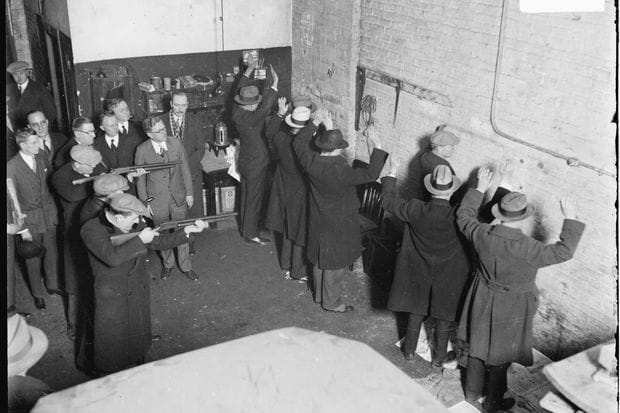
On February 14, 1929, gang warfare in America hit a peak unlike anything seen before. Seven men — all associated with one of Al Capone's rivals — were forced against an alley wall and executed by gunfire. Despite persistent efforts by authorities to tie Al Capone to the killings, he was never charged or formally linked to the crime.
Chicago was essentially Al Capone's domain. He held control over nearly all the trading, bootlegging, and gambling operations in the city. By 1927, his net income had soared to an astonishing $100 million a year — a figure that would translate to roughly $60 million in today's terms.
Hunting down rivals and wiping them out was simply how Al Capone operated. Gunning down anyone who stood in his way was his trademark, as he sought total dominance over Chicago. So when the Valentine's Day massacre of 1929 took place, virtually no one doubted Capone was behind it. The problem? Police had almost nothing concrete to go on. According to witnesses, men dressed as police officers entered the garage. When they emerged, it looked as though they were placing the men inside under arrest. Instead, those fake 'police officers' lined their victims up and gunned them down.
Though the blame fell squarely on Capone, he is known to have been at his Florida vacation home when the killings took place. The case remains one of the most famous unsolved crimes in history. With so little evidence to work with, no arrests were ever made, no one ever stood trial, and not a single conviction was handed down.
With his enemies out of the picture, you could argue Capone had reached the height of his power. Ironically, though, it also marked the beginning of his unraveling. His reputation for violence, his wealth, and his criminal empire earned him the designation of Public Enemy #1. Federal agencies began monitoring his every move. Careful as he was, they eventually gathered enough evidence to have him arrested and convicted.
Capone was picked up on minor offenses and served several short stints behind bars. His most significant sentence stretched to 11 years, during which he was first sent to Atlanta and later transferred to Alcatraz. After his release, he retreated to Florida, where he lived out the remainder of his life as a recluse.