
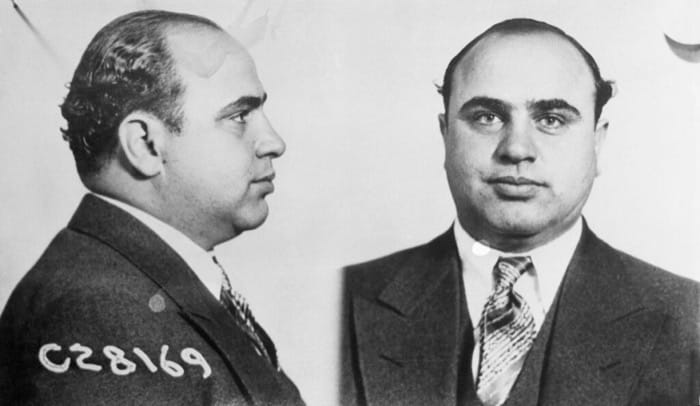
It was on October 21, 1931, that one of America's most notorious criminals, Al Capone, finally met justice — not for the violent empire he'd built, but for failing to pay his taxes. The legendary gangster was convicted of tax evasion and at last put behind bars.
His rap sheet was extensive and ruthless, yet ironically, it was tax evasion that proved to be the infamous crime boss's undoing. Prosecutors hit him with 22 counts, and although the jury only found him guilty on 5 of those, the punishment was severe: 11 years in a federal penitentiary. His subsequent appeal went nowhere.
Capone was only 33 years old when the verdict came down, but he had already spent seven years wreaking havoc across Chicago and beyond through murder, racketeering, and bootlegging throughout the Prohibition Era.
For someone branded "Public Enemy No. 1," prison proved to be a harsh and humbling experience. Sent first to Atlanta U.S. Penitentiary, Capone watched his health rapidly decline while enduring relentless bullying at the hands of fellow inmates.
His transfer to the now iconic Alcatraz Federal Penitentiary came in August 1934, where he remains to this day its most celebrated prisoner. Behind those walls, his condition only worsened. Neurosyphilis ravaged his body and mind, leaving him progressively disorientated as his mental capacities crumbled.
The Saint Valentine's Day Massacre — carried out on Valentine's Day of 1929 in Lincoln Park, Chicago — is widely believed to have been orchestrated by Al Capone. During that brutal attack, seven men with ties to the North Side Gang were executed at a local garage. Though authorities could never pin the crime on him directly, his tax evasion conviction represented one of the few available paths to bringing this notorious gangster to justice.