
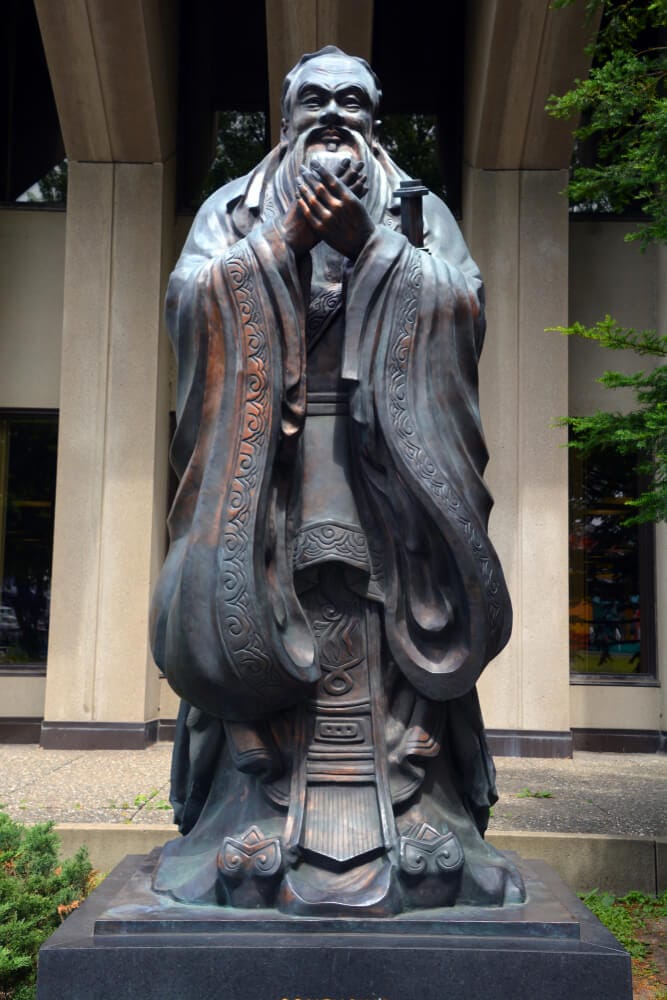
What makes Confucius stand out among the great thinkers of the ancient world? His philosophical teachings have long served as a moral and ethical guide for those seeking purpose-driven, meaningful lives through the practice of Confucianism.
Early life and family of Confucius
Born on September 28th, 551 BBC in Lu state, Confucius entered a world in turmoil. The collapse of the Zhou Dynasty had plunged the land into widespread war and chaos. Tragedy struck early in his childhood — when he was about three years old, his father was killed in battle, leaving his mother to raise him on her own as a single parent.
Career life
To help support his family, Confucius took on a variety of jobs, working as a shepherd, accountant and clerk. Yet even as a young man, he was a deeply dedicated student with a burning passion for transforming the world around him. This drive eventually led him to explore politics at some point in his life, hoping to reshape governance in China.
Central to his philosophies was the idea of equality — he urged leaders to treat others with respect and to lead by example. Not all leaders were receptive to these ideas, however. Facing resistance from those who disagreed with his teachings, he chose a different path: founding a school where he could pass his wisdom along to the younger generation. There, the main subjects he taught were ethics, history, philosophy and arts.
In a time when education was a privilege reserved for the rich, Confucius made an effort to accommodate people of all classes. His conviction was simple yet profound — the world would become a better place if more people lived well.
Confucius and The Golden Rule
At its core, this concept is about treating others how you would like to be treated, a principle that resonates across most religions as a popular teaching. Beyond this, Confucius also came up with other sayings that cemented his reputation and popularized his role as one of the most influential Chinese thinkers of the 6th century.