
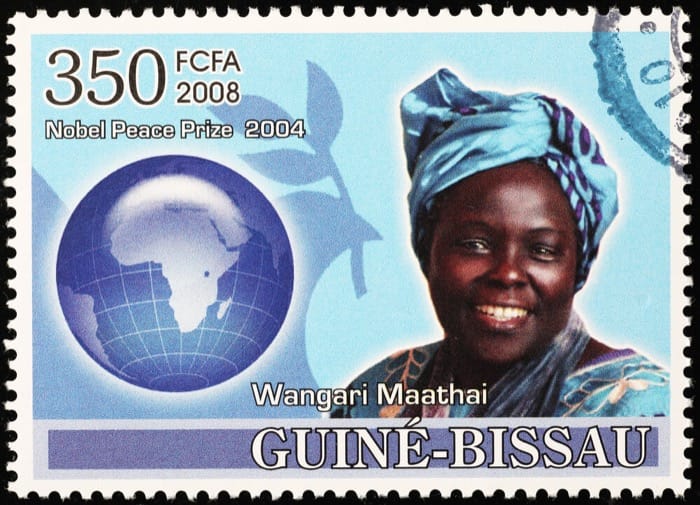
Arriving in the world on April 1, 1940 in Nyeri, Kenya, Wangari Maathai would go on to shatter barriers throughout her remarkable life. She earned distinction as the first woman from central and East Africa to achieve a biology doctorate — a groundbreaking academic milestone. Breaking new ground became something of a habit for Maathai, who also made history as the first female professor in Kenya, her home country.
Nobel Peace Work
History was made once again on October 8, 2004, when Wangari earned the Nobel Peace Prize — becoming the first African woman to receive the honor — in recognition of her contribution to democracy, peace, and sustainable development. She had positioned herself at the forefront of efforts to advance ecologically viable economic, cultural, and social development across both Kenya and the broader African continent.
Standing courageously against oppressive regimes in Kenya defined much of Wangari's activism. The distinctive methods of action that Maathai employed drew attention to political oppression on both the national and international stage. Beyond this, she served as a powerful motivator, encouraging women to step into leadership roles and inspiring those engaged in the struggle for democratic rights.
What set Maathai apart was her ability to weave together science, active politics, and social commitment into a unified vision. Her strategies went beyond environmental protection, working to establish a lasting foundation for ecological sustainability.
Maathai's Environmental Work
In 1977, Maathai founded the Green Belt Movement, through which she rallied women to plant millions of trees. The movement's model for mobilizing communities around tree planting has since been adopted by other nations around the world. The looming threat of desertification was a driving force behind Wangari's deep commitment to forest protection.
Yet mobilizing women extended far beyond planting trees alone — Maathai championed broader causes including women's rights, international solidarity, and democracy. As the Nobel Committee noted, "She thinks globally and acts locally."