
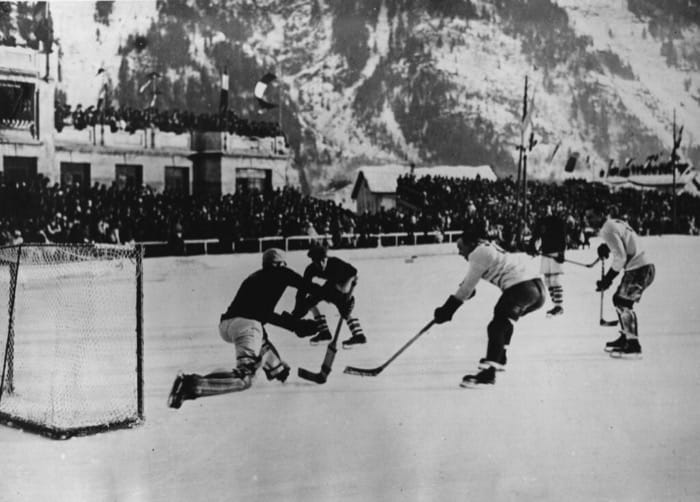
The inaugural Winter Olympic Games wrapped up on Feb. 5, 1924, in Chamonix, France, after a thrilling run of competition that had kicked off on January 25 at the base of Mont Blanc. Held during the same year as the Summer Olympics, the gathering was originally called the "International Winter Sports Week." However, the event proved so popular that by 1925, the International Olympic Committee (IOC) officially adopted it and retroactively designated Chamonix as the site of the first Winter Games.
The roots of organized winter competition in Europe stretched back to 1901, when Sweden launched the Nordic Games — a quadrennial showcase of athletic talent among Scandinavian nations. When the IOC floated the idea of incorporating a winter component into the 1912 Olympics, which were hosted by Sweden, the Swedes turned down the proposal to protect the prestige of their own event. Winter sports did make appearances at earlier Summer Games — figure skating debuted at the London Summer Olympics in 1908, and ice hockey joined the program at the Antwerp Olympics in 1920 — though both had to be scheduled several months after the main events due to seasonal constraints. Eventually, the IOC and Sweden reached an accord in time for the staging of International Winter Sports Week in 1924.
Comprising 16 events spread across five sports and nine disciplines, the first Winter Olympics offered a diverse athletic program. The disciplines included cross-country skiing, ski jumping, military patrol, Nordic combined skiing (jumping and cross-country), bobsleigh, curling, ice hockey, figure skating, and speed skating. Athletes from sixteen nations took part, with Norway claiming the largest overall medal haul while sharing the top spot in gold medals with Finland. The United States finished third in total medals, though the Americans managed just a single gold — earned by Charles Jewtraw in the 500-meter speed skate.